

Pentecost in Berlin — Carnival of Cultures 2026 Berlin, Germany
Overview
Pentecost in Berlin — Carnival of Cultures 2026 took place from 22–25 May 2026 as part of Berlin’s Pentecost weekend. The four-day street festival centred on Blücherplatz in Kreuzberg, while the main Carnival of Cultures street parade took place on Sunday, 24 May 2026, in Friedrichshain.
The Karneval der Kulturen, or Carnival of Cultures, is one of Berlin’s major multicultural public celebrations. It brings together music, dance, performance, visual arts, food, community organisations, and cultural groups representing Berlin’s diverse population.
The 2026 edition marked the festival’s 30th anniversary. The parade featured groups presenting music, costumes, dance, performance, and artistic traditions from different cultural backgrounds.
Make Your European Event Trip Easy with Eura Travelo
Traveling to Europe for a festival, concert, sporting event, or business occasion involves more than simply choosing an event. Eura Travelo helps bring your journey together with support for travel planning, accommodation, event arrangements, and local experiences. Save time, reduce the hassle, and enjoy a smoother journey from planning to the event itself.
Unlike traditional carnival celebrations associated with the pre-Lenten season, Berlin’s Carnival of Cultures is specifically held around Pentecost and has no connection with Easter or Ash Wednesday.
Cultural Significance & Origins
The Carnival of Cultures began in Berlin in 1996, with the first parade taking place in Kreuzberg. Its origins are connected with the city’s growing multicultural and post-migrant communities and with efforts to create greater visibility for cultural diversity.
The organisers describe the event as having been established partly in response to racist attacks in Germany during the early 1990s. From its beginning, the festival therefore combined cultural celebration with themes of diversity, solidarity, participation, and opposition to racism.
Over the years, the event developed into a major public festival attracting hundreds of thousands of visitors. Berlin’s official event information describes the Carnival as a four-day celebration culminating in the large Pentecost Sunday parade.
Traditions, Rituals & Customs
The central tradition is the Carnival of Cultures parade, in which organised groups travel through Berlin with decorated vehicles, costumes, choreography, music, and performances.
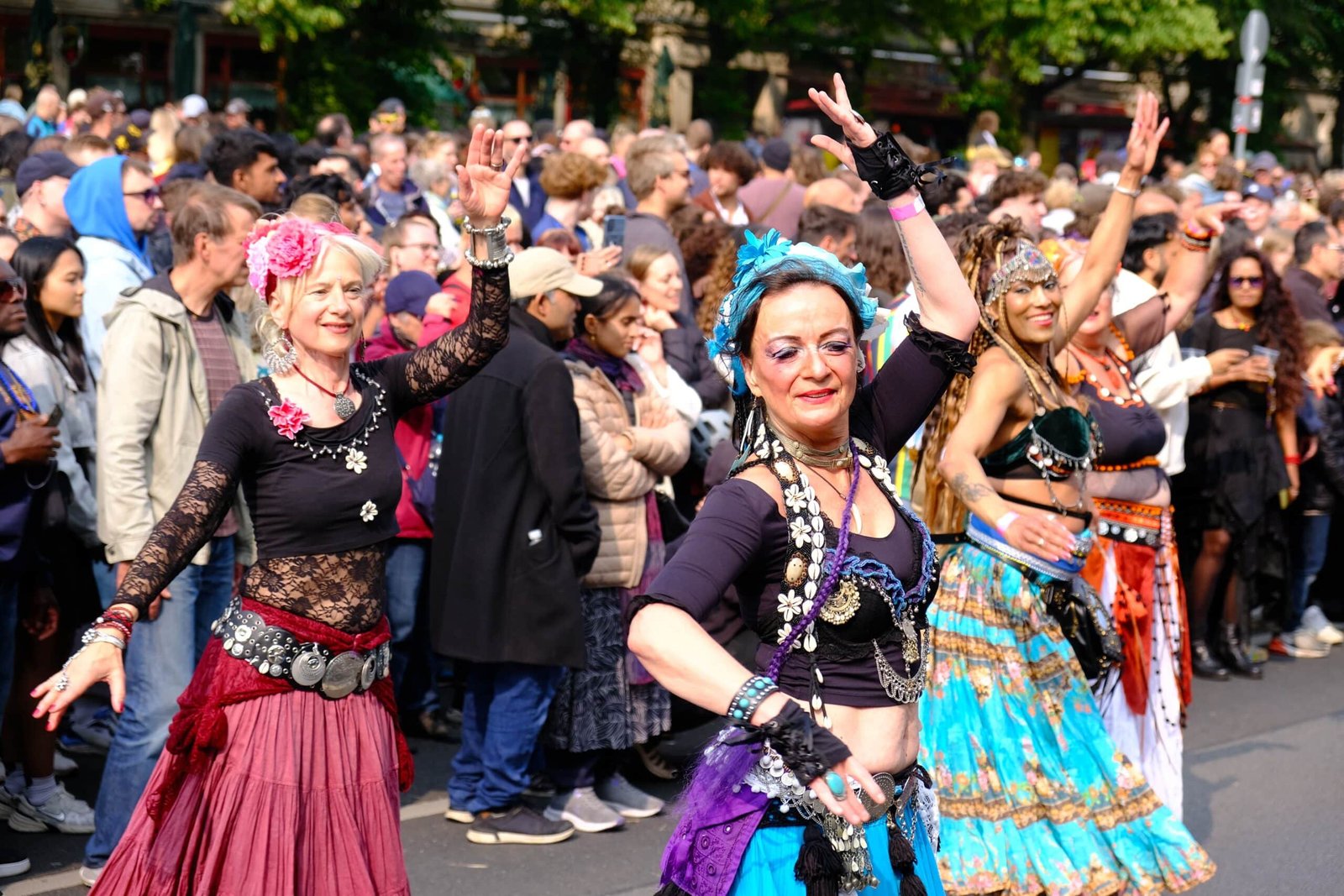
The parade is deliberately multicultural rather than based on one national or regional carnival tradition. Visitors can encounter Brazilian samba, African rhythms, Asian dance, European folk traditions, Latin American music, contemporary performance, and many other artistic forms during the same event.
The surrounding street festival adds another layer of participation, with music stages, food stalls, cultural activities, performances, and opportunities for visitors to meet different communities.
What to Expect at the Festival
The 2026 Carnival of Cultures combined a four-day street festival around Blücherplatz with the large Sunday parade.
The festival area featured multiple music corners and stages, with programming ranging from Afrobeat, Amapiano, soul and hip-hop to Balkan music, Anatolian rock, Latin American folklore, Brazilian music, Caribbean sounds, jazz, electronic music, and other styles.
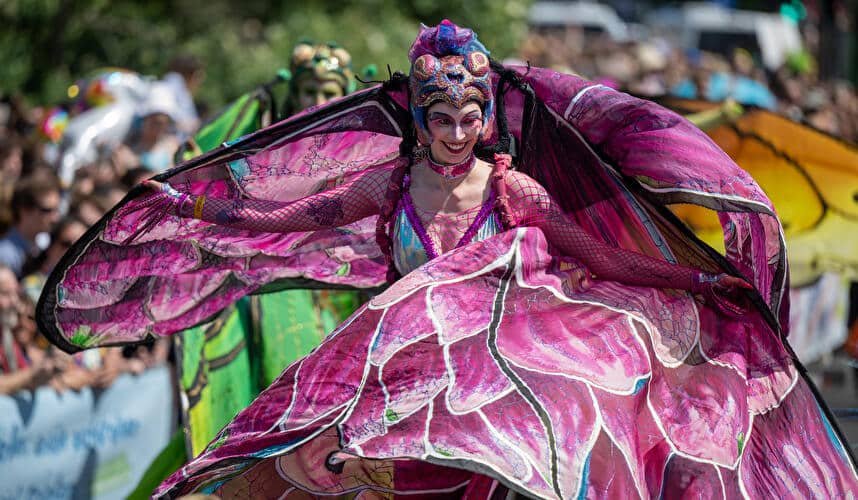
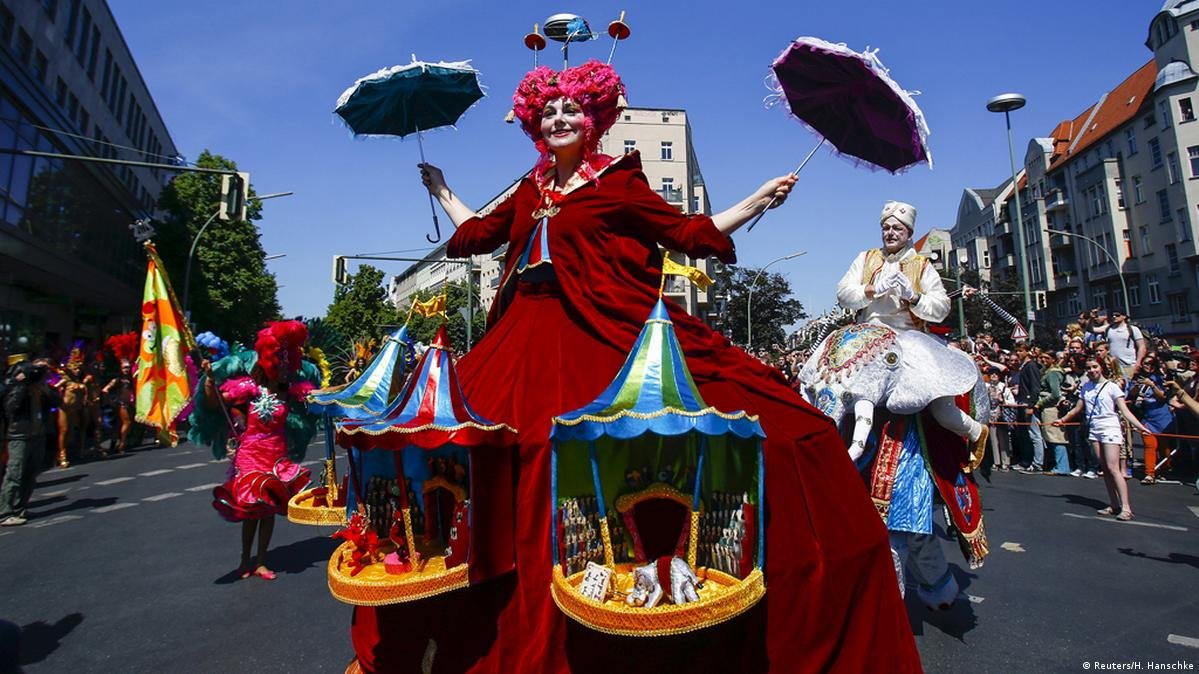
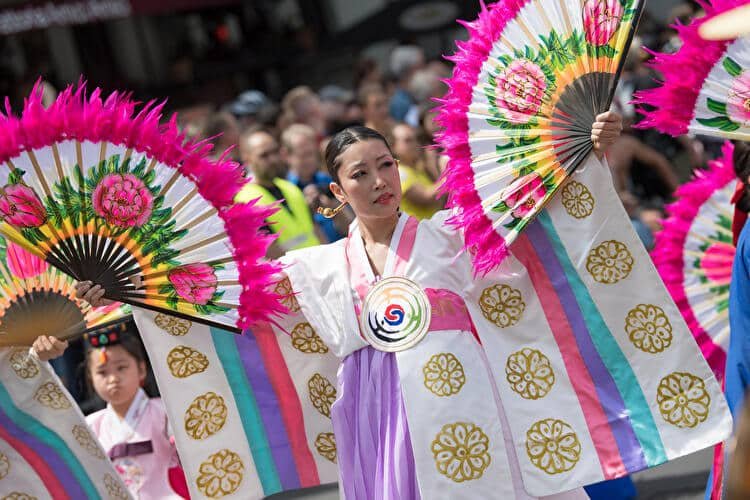
The parade provided a much larger moving spectacle. Participants appeared in colourful costumes and elaborate performances, while decorated vehicles and musical groups travelled along the designated route.
Food was another important element of the street festival, with international culinary offerings reflecting Berlin’s multicultural communities.
Date & Schedule
The 2026 Carnival of Cultures took place over four days:
Friday, 22 May 2026
Street festival at Blücherplatz: 4:00 PM–11:00 PM
Saturday, 23 May 2026
Street festival at Blücherplatz: 12:00 PM–11:00 PM
Sunday, 24 May 2026 — Pentecost Sunday
Street festival at Blücherplatz: 12:00 PM–11:00 PM
Main street parade: 1:30 PM–10:00 PM
Monday, 25 May 2026 — Pentecost Monday
Street festival at Blücherplatz: 12:00 PM–7:00 PM
The 2026 parade started at 1:30 PM at the intersection of Frankfurter Allee and Proskauer Straße and proceeded along Karl-Marx-Allee toward Berolina Straße.
Visiting this event? Don’t miss out on these amazing activities and local experiences while you’re here.
Main Events & Programme
The main parade took place on Pentecost Sunday, 24 May. It brought together numerous cultural groups, musicians, dancers, performers, and decorated vehicles.
The 2026 route was different from the traditional Kreuzberg route because of a multi-year construction project affecting Gneisenaustraße. Since 2025, the parade has been held in Friedrichshain, starting at Frankfurter Allee and moving along Karl-Marx-Allee.
Music was central to both the parade and the surrounding festival.
The 2026 programme included styles such as samba, Afrobeat, Balkan music, Turkish music, Anatolian psychedelic rock, Latin American folklore, Cuban rumba, Brazilian music, Caribbean sounds, jazz, and electronic music.
The parade featured dance, acrobatics, theatrical performances, visual arts, and other forms of creative expression. Groups used costumes, choreography, music, and decorated vehicles to present their artistic identities.
The four-day street festival around Blücherplatz provided a more stationary environment for visitors.
Multiple music corners and stages operated throughout the weekend, alongside food, cultural activities, performances, and community spaces.
The Kinderkarneval der Kulturen took place separately on 23 May 2026 in Kreuzberg.
The children’s event began at Mariannenplatz, with a costumed children’s parade travelling toward Görlitzer Park, where the children’s festival followed from 2:00 PM. The 2026 theme animal was the axolotl.
The 2026 programme extended beyond the main festival itself. A group exhibition titled “Vom Sehen und Gesehenwerden” was held at Kunstquartier Bethanien from 13–26 May, exploring the history and cultural representation associated with the Carnival of Cultures.
Traditional Dress, Arts & Crafts
Costumes are one of the most recognisable visual features of the Carnival of Cultures.
However, the event is not based on a single traditional carnival costume. Participants create clothing and visual designs connected with their particular artistic or cultural presentation. Elaborate headpieces, colourful fabrics, masks, body decoration, dance costumes, and theatrical designs can all appear during the parade.
Decorated vehicles are also an important artistic component. Some parade groups transform their vehicles into large-scale mobile stages or works of art.
Traditional Food & Local Specialties
International food is an important part of the street festival around Blücherplatz.
Visitors can expect food influenced by the many communities represented in Berlin, with options varying from year to year. The 2026 festival combined its music and performance programme with culinary offerings and food stalls.
The event is also a useful opportunity to explore Berlin’s broader international food scene. Kreuzberg in particular has a wide range of restaurants, bakeries, cafés, street-food venues, and international cuisines.
Location & Festival Areas
The main four-day street festival was held around Blücherplatz in Kreuzberg. This was the principal location for the stages, music corners, food, performances, and community activities.
The 2026 parade began at the intersection of Frankfurter Allee and Proskauer Straße in Friedrichshain. From there, the procession travelled along Karl-Marx-Allee toward Berolina Straße. These locations hosted the Children’s Carnival of Cultures on 23 May.
Getting to the Festival
By Public Transport
Berlin’s extensive U-Bahn, S-Bahn, tram, and bus network provides connections to both the festival area and the parade route.
For the Blücherplatz festival, visitors should check the nearest operating U-Bahn and bus connections before travelling, as special event arrangements can affect local transport.
For the 2026 parade, visitors could use public transport to reach the Friedrichshain starting area around Frankfurter Allee and Proskauer Straße.
By Car
Driving directly to the event areas is generally inconvenient during the festival because road closures and no-parking zones are introduced around both the parade and street festival.
The organisers specifically advise residents and visitors to observe temporary road closures and no-parking restrictions.
On Foot
Once inside the relevant neighbourhoods, walking is one of the most practical ways to move between viewing points and festival activities.
Where to Stay Nearby
Visitors attending the full Pentecost weekend can stay in Kreuzberg, Friedrichshain, Mitte, or other central areas of Berlin.
Kreuzberg accommodation is particularly convenient for the four-day street festival around Blücherplatz, while Friedrichshain can be useful for visitors primarily interested in the Sunday parade.
Berlin’s extensive public transport network means visitors can also stay farther from the event areas without losing access to the festival.
Because Pentecost is a busy travel period, accommodation should be arranged in advance.
What Visitors Can Participate In
The Carnival of Cultures is primarily a public spectator and participation event. Visitors can explore the street festival, listen to music, watch dance and theatrical performances, sample international food, interact with cultural organisations, and watch the main parade.
Children can participate in the dedicated Children’s Carnival of Cultures, while adults and families can explore the broader four-day programme. Visitors who want to participate as parade performers must join an approved participating group rather than simply entering the parade independently.
Things to Do Before or After the Festival
Kreuzberg is one of Berlin’s most culturally diverse neighbourhoods and offers cafés, restaurants, markets, galleries, and independent shops. The East Side Gallery along the former Berlin Wall is one of the city’s best-known open-air art sites and can be combined with a visit to Friedrichshain.
Berlin’s Museum Island provides several major museums and historic landmarks in the centre of the city. Brandenburg Gate and the surrounding central Berlin area are suitable additions to a longer city break. The multicultural character represented at the Carnival of Cultures continues throughout Berlin’s neighbourhoods, particularly in Kreuzberg, Neukölln, Wedding, and other diverse districts.
Visitors can find a broad selection of international cuisine around Kreuzberg and Friedrichshain. Kreuzberg is particularly known for Turkish, Middle Eastern, Southeast Asian, Latin American, European, and vegetarian food, alongside cafés, bakeries, bars, and casual restaurants. During the festival weekend, visitors can also eat directly at the street festival, where food stalls form part of the event experience.
Ticket Information & Access
The Carnival of Cultures is free to attend. The 2026 street festival and main parade were both listed as free events.
Visitors do not need a general admission ticket to enter the street festival or watch the parade.
Some individual activities or external events associated with the wider programme may have their own arrangements, so visitors should check the specific event information when relevant.
The organisers also operate awareness and support points during the festival and have a Code of Conduct covering respectful behaviour, discrimination, harassment, and safety.
Official Event Information
For official programme information, parade details, stage schedules, maps, visitor guidance, and future editions, visit:
https://karneval.berlin
The 2026 official programme confirmed the four-day festival from 22–25 May, with the main parade on 24 May 2026.
Tickets Sell Out
in Minutes
Maps
Contact
Video
FAQ's
When was Carnival of Cultures 2026 held in Berlin?
The 2026 Carnival of Cultures took place from 22–25 May 2026, during the Pentecost weekend.
When was the main Carnival of Cultures parade?
The main parade took place on Sunday, 24 May 2026, which was Pentecost Sunday. It began at 1:30 PM.
Where was the 2026 parade held?
The 2026 parade started at Frankfurter Allee and Proskauer Straße in Friedrichshain and travelled along Karl-Marx-Allee toward Berolina Straße.
Where was the street festival held?
The four-day street festival was held around Blücherplatz in Kreuzberg from 22–25 May 2026.
Is Carnival of Cultures free?
Yes. The main street festival and parade are free to attend.