
Medieval Week on Gotland 2027 – Cultural Festival Sweden
What to expect in 2027
Medieval Week on Gotland 2027 will bring Visby and parts of the surrounding island of Gotland to life with medieval markets, historical camps, jousting, crafts, music, theatre, storytelling, lectures, workshops, food, guided walks and traditional celebrations. The festival is one of Sweden’s largest historical events and has been organised since 1984, with most activities centred around the medieval city of Visby.
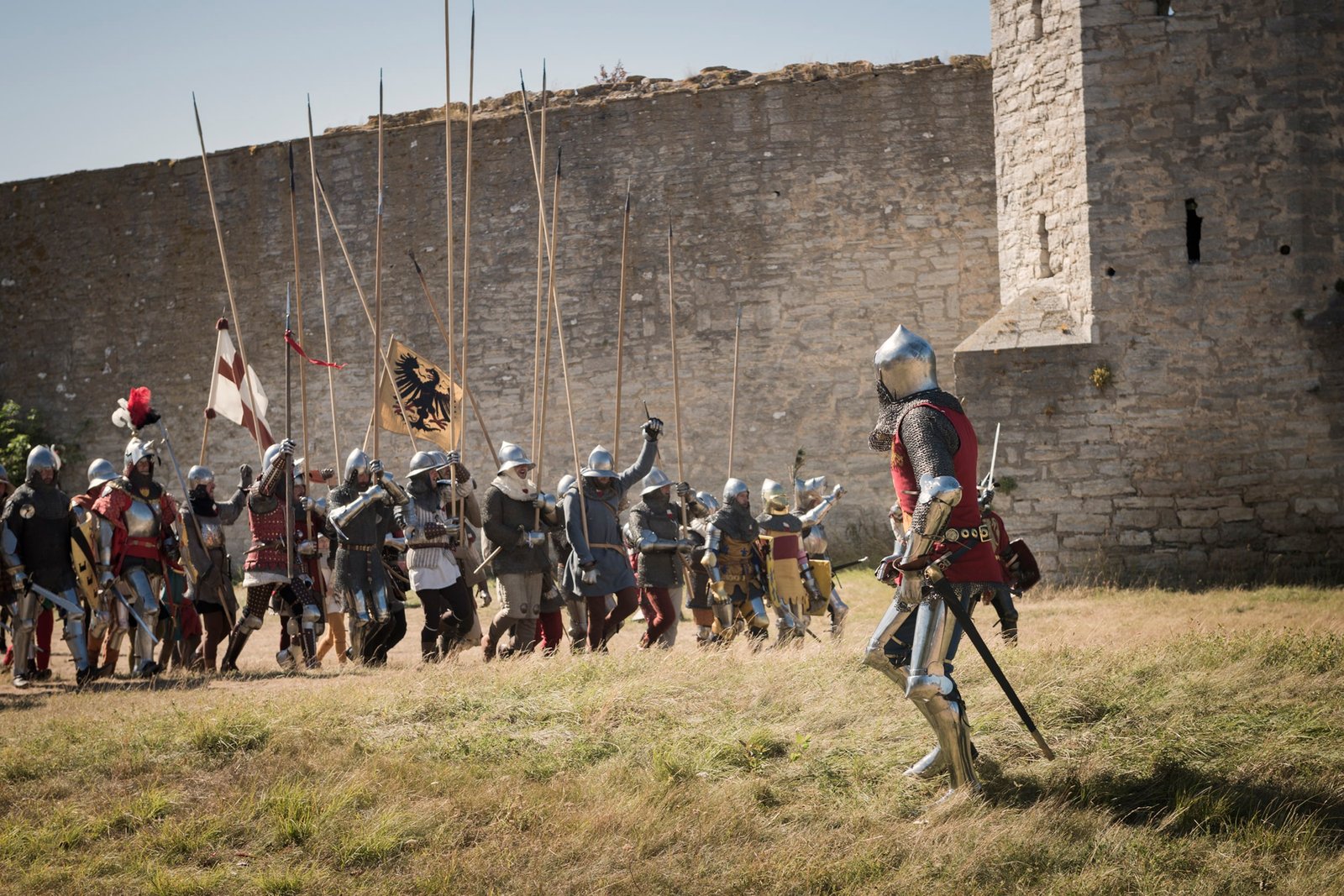
The event is designed as an immersive cultural festival rather than a single performance or exhibition. Visitors can walk through medieval-style markets, watch historical combat demonstrations, see knights and archers, enter reconstructed camps, take part in craft workshops and experience performances in churches, ruins, courtyards, streets and festival areas.
The latest official programme demonstrates the scale of the event, with more than 40 venues and hundreds of programme items covering performances, music, lectures, courses, food and drink, markets, crafts, historical camps, parades and hands-on activities.
Make Your European Event Trip Easy with Eura Travelo
Traveling to Europe for a festival, concert, sporting event, or business occasion involves more than simply choosing an event. Eura Travelo helps bring your journey together with support for travel planning, accommodation, event arrangements, and local experiences. Save time, reduce the hassle, and enjoy a smoother journey from planning to the event itself.
The 2027 programme, theme, performers and detailed schedule have not yet been published. Visitors should therefore use the established festival format as a guide rather than treating individual historical programme items as confirmed for 2027.
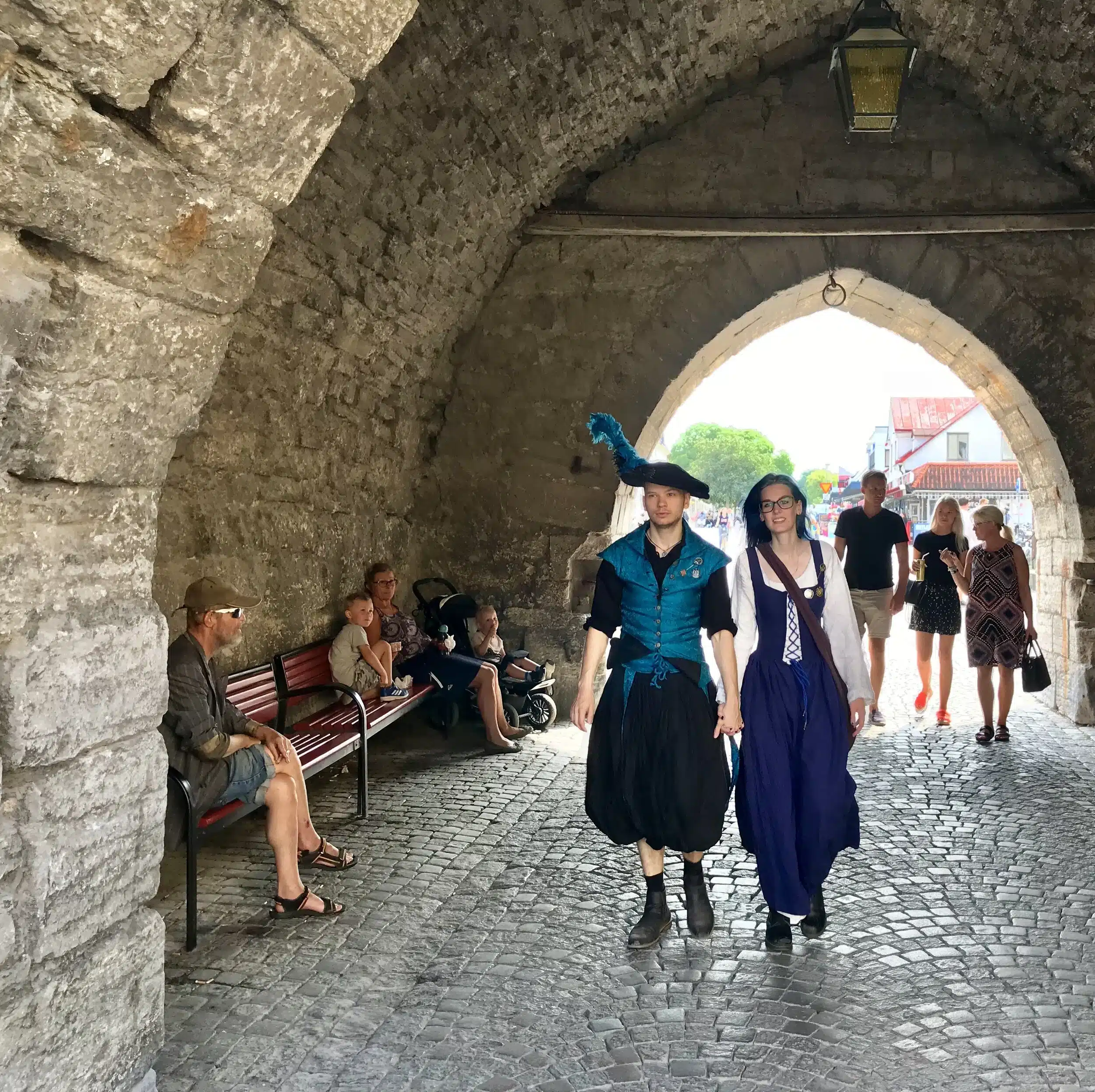
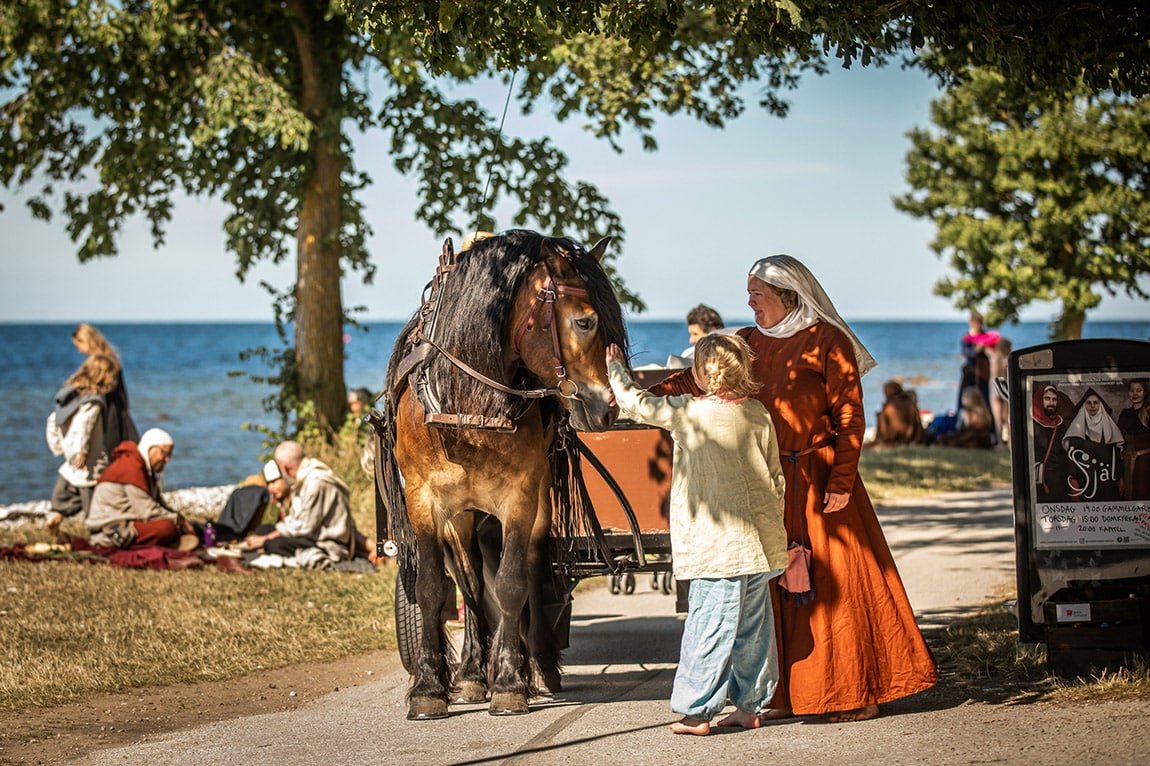
Costumes are welcome but are not required. The organisers explicitly welcome visitors whether they arrive in historical dress or ordinary contemporary clothing.
Event dates
Medieval Week on Gotland 2027 is planned for August 2027, with the exact dates still to be announced.
The festival traditionally follows an eight-day Sunday-to-Sunday format in August. The exact 2027 calendar dates, opening times and individual programme schedule should be checked through the official Medieval Week website once the 2027 programme is released.
Because the festival spreads across many locations, visitors staying for several days can experience substantially different activities each day, from daytime markets and workshops to evening performances, concerts, fire shows and medieval tavern entertainment.
Visiting this event? Don’t miss out on these amazing activities and local experiences while you’re here.
Venues & festival locations
Most Medieval Week activities take place in Visby, a UNESCO-listed medieval city on the island of Gotland, but the festival also uses selected locations elsewhere on the island.
Important festival areas and venues include:
- Strandgärdet and the Medieval Arena
- Nordergravar
- Paviljongsplan
- Visby Cathedral, Sankta Maria
- Almedalen
- Kapitelhusgården
- St. Göran’s ruin
- Fighting Arena
- Viking and historical encampments
- Pirate Camp Tundlaheim
- Medieval markets
- Gotland countryside locations
- Medieval taverns and cultural venues
Strandgärdet is particularly important for jousting, combat demonstrations, archery and family activities. The area has included the Medieval Arena, children’s Riddargård, historical camps, Viking activities and craft facilities.
Paviljongsplan has traditionally hosted a craft market, children’s areas and entertainment spaces, while Nordergravar has been associated with historical encampments and other performances.
Visby Cathedral adds a different atmosphere, with religious music, medieval-themed services, guided tours and access to historic parts of the building.
Full cultural programme
The 2027 programme has not yet been released, but Medieval Week traditionally combines historical interpretation with live entertainment and participatory cultural activities.
The programme can include:
- Medieval markets
- Jousting tournaments
- Historical combat
- Archery demonstrations
- Historical camps
- Medieval music
- Theatre
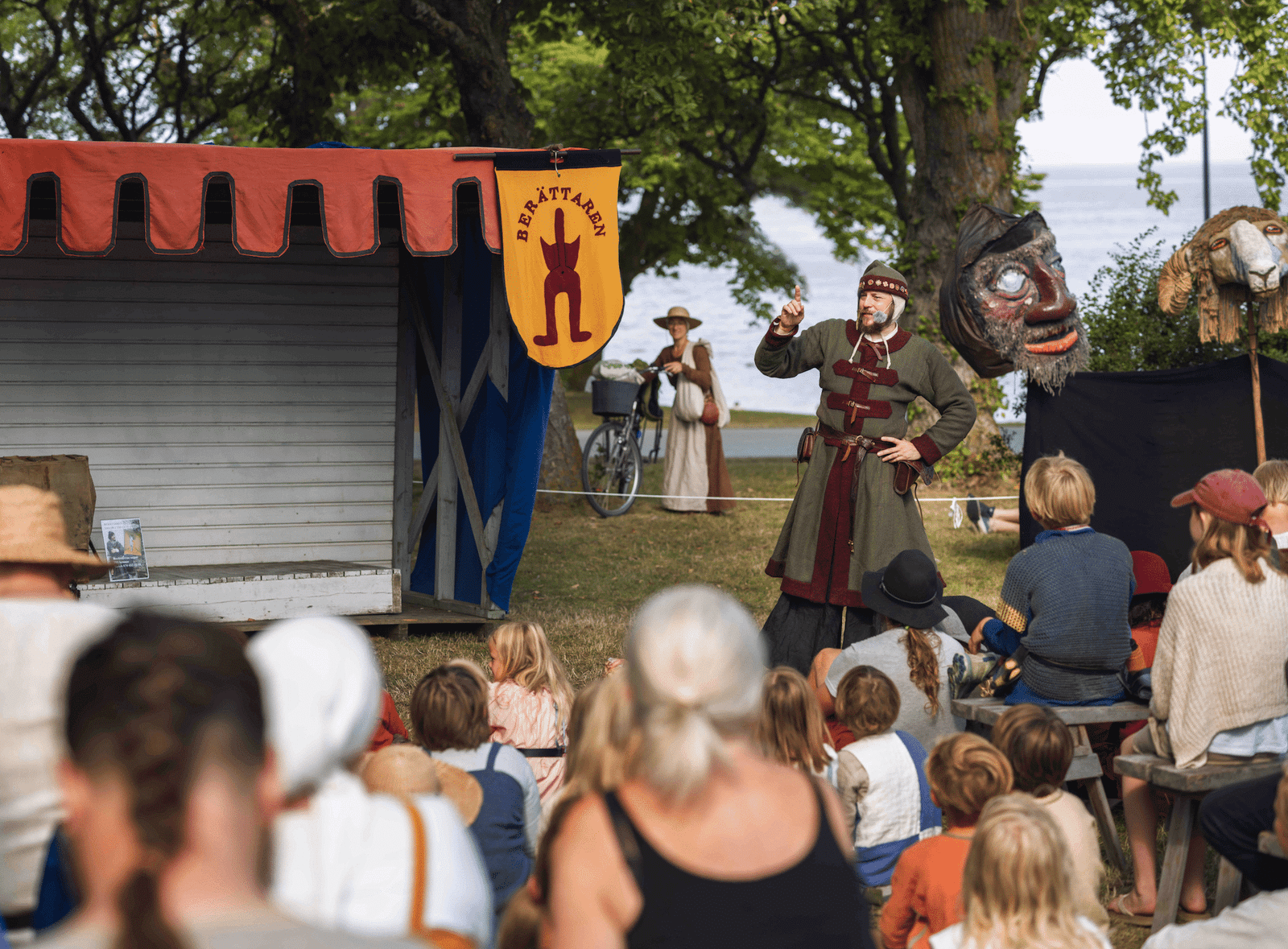
- Storytelling
- Fire shows
- Lectures
- Guided historical walks
- Craft workshops
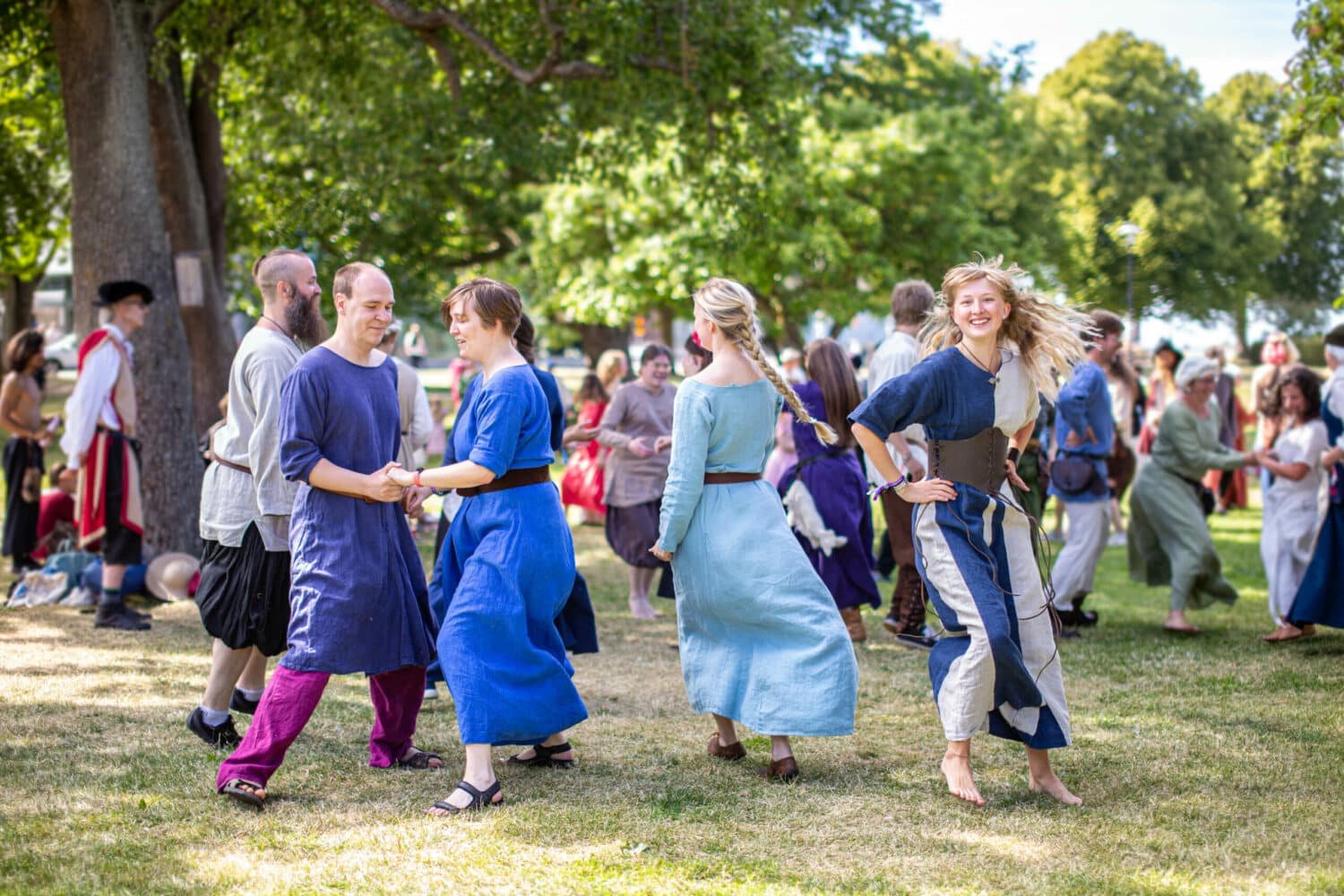
- Medieval dancing
- Children’s activities
- Food and drink experiences
- Open stages
- Historical games
- Religious and cultural programmes
- Parades
- Medieval-themed concerts
The official programme describes the festival as a coordinating event in which performers, craftsmen, lecturers, historical groups and other creators contribute their own activities. This means the final programme is broad and changes from one edition to another.
Visitors can therefore create their own experience, concentrating on living history, family activities, crafts, food, music, historical research or entertainment.
Featured traditions & performances
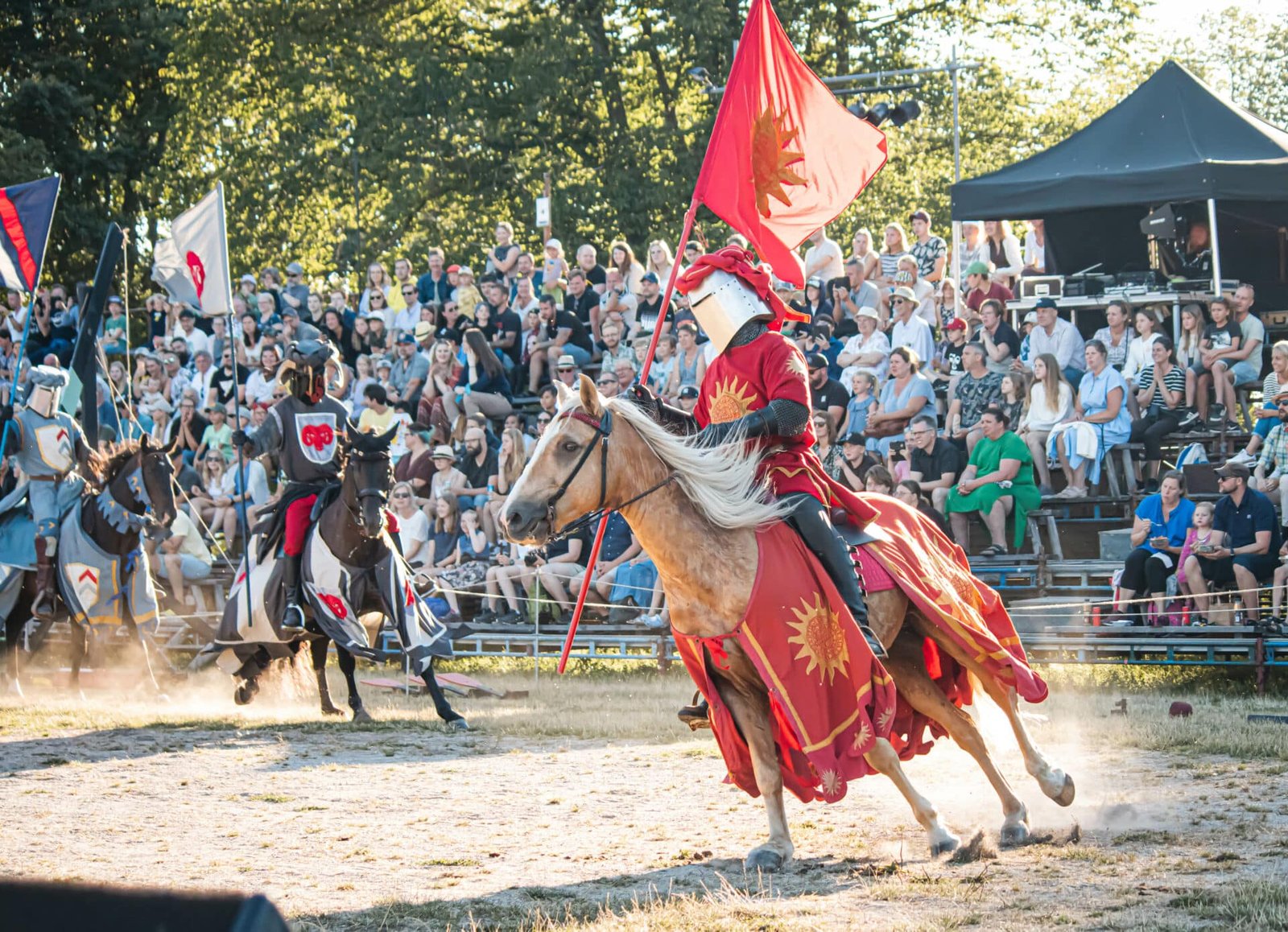
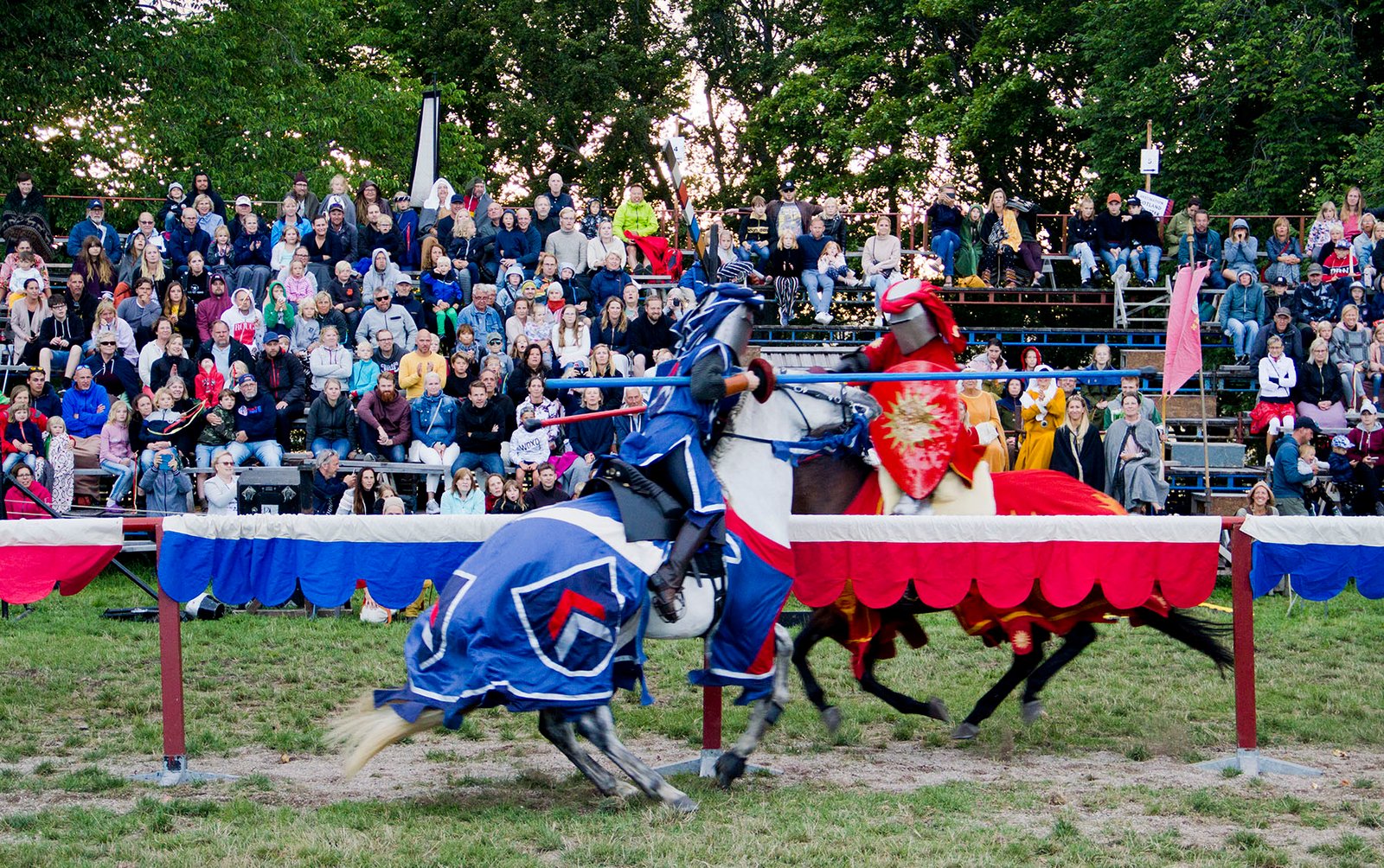
Jousting is one of the most recognisable traditions associated with Medieval Week. The official festival describes the experience around skilled riders, horses, archers, knights, squires and heralds, combining historical imagery with competitive spectacle.
Historical combat is another important part of the festival. Combat groups demonstrate medieval-style weapons and fighting techniques, while archery groups provide demonstrations and competitions.
Fire performances are also a recurring feature. The programme has included professional fire performers, evening shows and large outdoor spectacles.
Music ranges from historically inspired performances to modern interpretations of medieval culture. Concerts can take place in churches, courtyards, taverns and dedicated stages.
Other recurring traditions include:
- Medieval dancing
- Storytelling
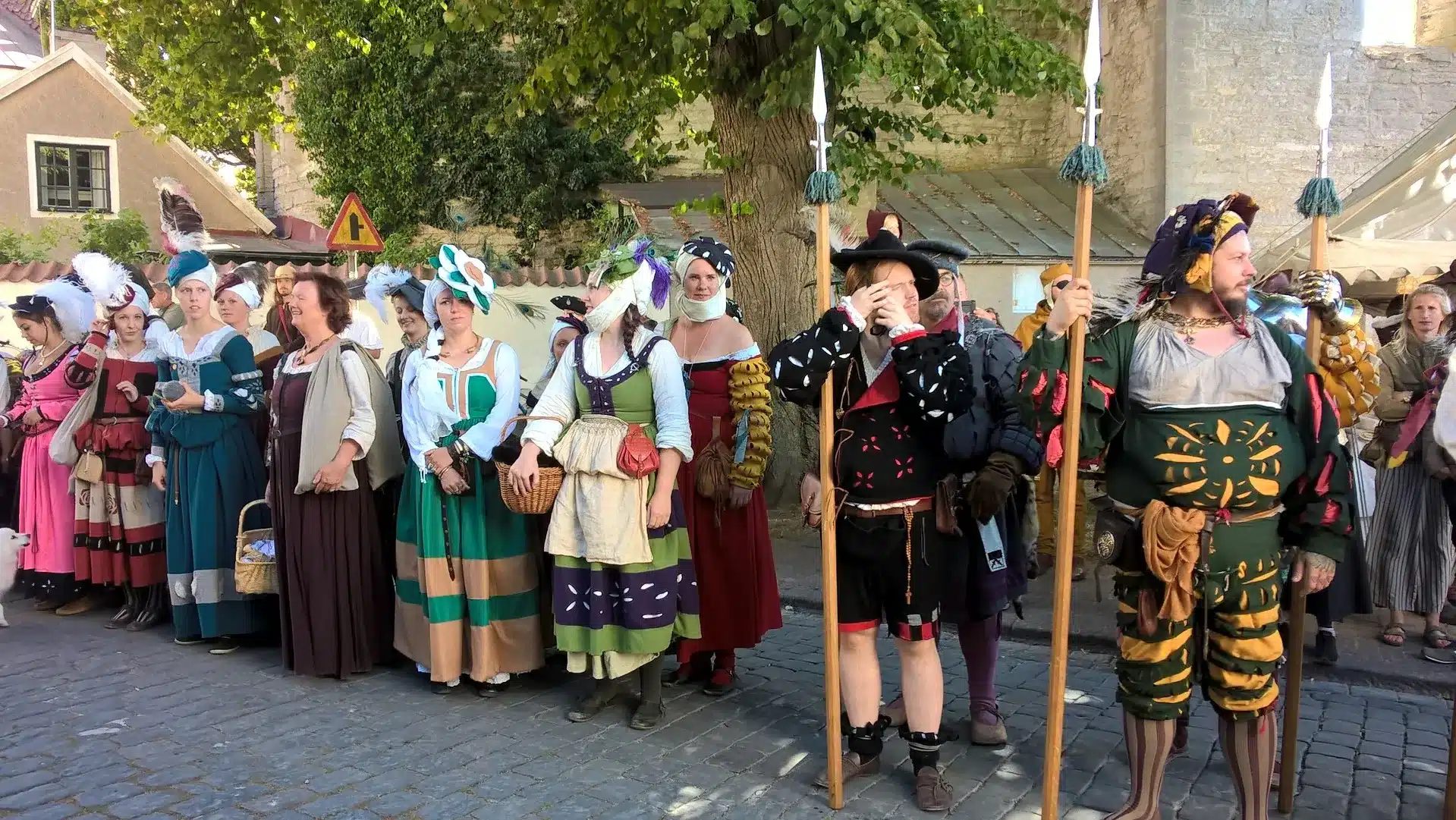
- Historical costume
- Craft demonstrations
- Medieval games
- Archery
- Historical cooking
- Open camps
- Traditional-style markets
- Medieval theatre
- Folklore and legends
Historical & heritage highlights
Visby provides the historical setting that makes Medieval Week different from a conventional themed festival. The city’s medieval walls, towers, ruins, narrow streets and historic buildings form the backdrop for many activities.
The festival has a strong connection with Gotland’s medieval heritage and the history of Visby as an important Baltic trading city. Activities take place in and around historic environments rather than being isolated inside a modern festival complex.
Visitors can explore sections of the medieval city wall, historic ruins, churches, streets and archaeological surroundings while attending festival activities.
Visby Cathedral is particularly significant. Medieval Week’s programme has included guided tours of the cathedral’s medieval attic and tours exploring historic rooms and features.
The festival itself also has a long history. It began in 1984 and is described by the organisers as Sweden’s largest historical festival. Its organisational foundation has an educational and public-information mission.
Events & activities schedule
The detailed 2027 schedule will be published later. Based on the established festival format, visitors can expect the programme to operate from morning activities through late-night entertainment.
Morning: Historical walks, cathedral activities, workshops, children’s programmes, craft sessions, lectures and open camps can provide a quieter start to the day.
Afternoon: Markets become particularly active, while visitors can combine shopping with combat demonstrations, archery, performances, guided tours and family activities.
Evening: Jousting, concerts, theatre, fire shows, storytelling and medieval tavern entertainment become more prominent.
Late evening: Selected venues can continue with music, performances and food and drink. Medieval Week’s programme has previously included venues operating into the evening and late night.
The programme is intentionally varied, so visitors should leave enough flexibility to discover smaller performances rather than planning every hour in advance.
Ticket types & entry options
The main festival admission system is based around the Medieval Festival Band. The official festival describes several options, including a full festival pass, day pass, camping week pass and medieval camp week pass.
A festival band provides access to the festival areas, markets, historical camps, participating medieval taverns and many free programme activities. Reserved-seat tickets for specific performances, courses and other limited-capacity events are normally purchased separately.
Historical pricing from the latest available edition provides useful guidance for 2027:
- Festival band: approximately $38.50 for the historical full-festival admission example
- Day band: approximately $14.00 for a historical single-day example
- Children: free festival band for children up to age 6
- Children and youth: discounted rates are available for younger visitors
- Special performances: prices vary according to the individual programme organiser
The festival band prices above are historical reference figures converted to USD and are not confirmed 2027 prices. Individual programme creators set many of their own ticket prices, while the festival coordinates ticketing and charges an administrative fee.
Some free events may still require advance reservation because of limited capacity or the protected nature of historic locations.
Guided tours & cultural experiences
Guided experiences are an important part of Medieval Week because they allow visitors to explore Visby’s history beyond the main entertainment programme.
Previous programmes have included:
- Guided walks through medieval Visby
- Cathedral tours
- Historical storytelling walks
- Medieval food and drink tours
- Horse-and-carriage tours
- Pilgrimage walks
- Historical legends and folklore walks
- Tours of medieval architectural features
A previous programme included guided experiences focused on medieval food and drink in Visby, as well as tours of the city’s cathedral and historic spaces.
Some tours have limited capacity and require separate booking, so visitors interested in historical interpretation should reserve popular experiences early when the 2027 programme becomes available.
Special ceremonies & celebrations
Medieval Week traditionally begins with ceremonial and community-focused activities that establish the historical atmosphere.
Opening celebrations can include parades, speeches, music and the transition from ordinary Visby life into the festival environment. Historical accounts of the event describe an opening parade through central Visby leading toward the market area.
The festival also incorporates religious and historical traditions through Visby Cathedral and other historic locations.
Special celebrations can include:
- Opening ceremonies
- Historical parades
- Jousting finales
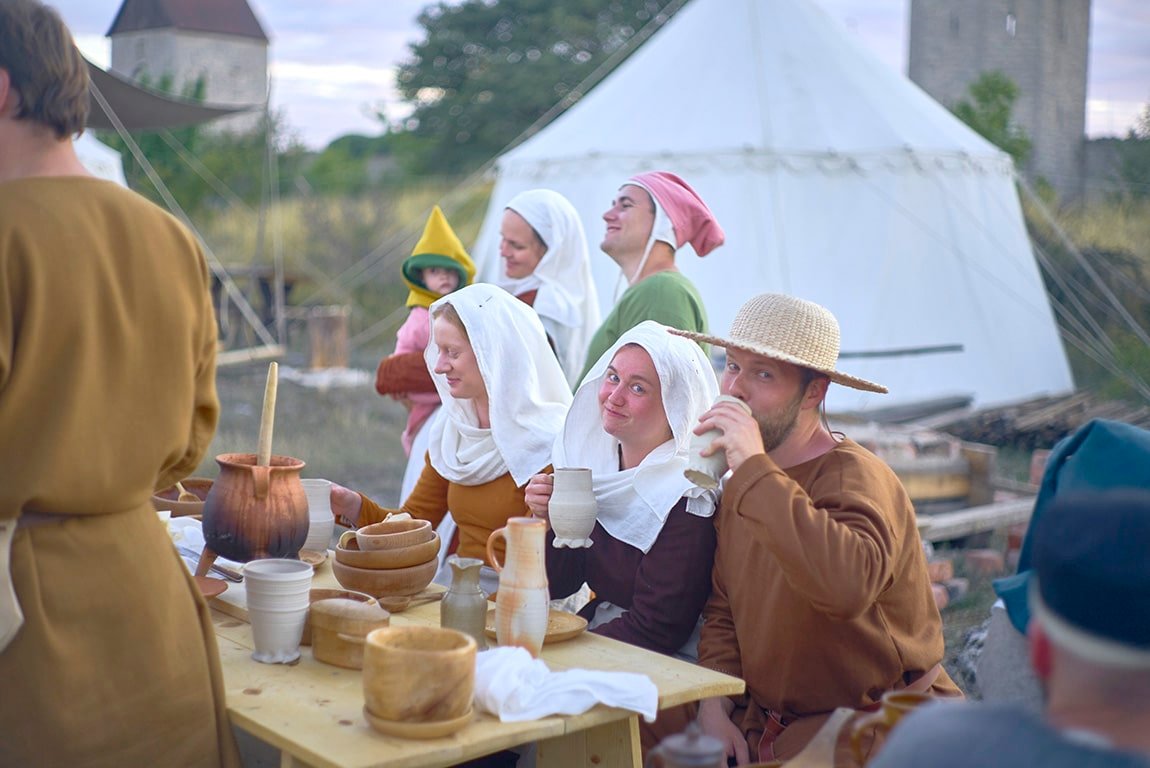
- Medieval feasts
- Fire performances
- Community dances
- Storytelling evenings
- Historical demonstrations
- Closing celebrations
The precise ceremonies planned for 2027 will depend on the final programme.
Festival rules
Medieval Week takes place in sensitive historical and protected environments, so visitors are expected to respect the city, ruins, parks and festival infrastructure.
Important visitor considerations include:
- Follow instructions from festival staff and volunteers.
- Respect historic ruins, walls, churches and archaeological areas.
- Do not climb restricted structures.
- Follow venue-specific safety instructions.
- Keep children supervised in crowded areas.
- Respect performers and historical reenactors.
- Follow campsite fire regulations.
- Keep campsites and public areas clean.
- Follow rules concerning pets and animals.
- Observe any temporary restrictions around performances.
Camping regulations place particular emphasis on safety, responsible behaviour and fire precautions because Gotland can experience dry summer conditions. The festival also states that violence or abusive behaviour can result in immediate removal from the campsite.
How to get there
Gotland is an island, so visitors normally reach Visby either by air or ferry.
Visby Airport provides air connections to the mainland and is the principal airport serving the island.
Ferries operated by Destination Gotland provide another major route to Visby. Visitors travelling with cars can take their vehicle on the ferry, which can be useful for exploring areas outside central Visby.
Once in Visby, many major Medieval Week locations are within walking distance of one another. The festival’s own modern and medieval camps are also positioned within walking distance of the city centre.
Visitors should allow extra time for ferry and airport transfers during the busy festival period.
Public transport & parking
Walking is one of the easiest ways to experience central Medieval Week because many activities are distributed around Visby’s historic core.
Public buses can be useful for reaching areas outside the central festival zone and for exploring Gotland beyond Visby.
Visitors arriving by car should expect increased traffic and limited parking close to the busiest festival locations.
Festival camping has dedicated parking arrangements, but vehicles are not normally parked immediately beside tents. The official camping information states that modern camping parking is located away from the camping pitches, with a walking connection between the parking area and campsite.
For central Visby, visitors should consider parking outside the busiest historic areas and walking into the festival zone.
Accommodation areas
Visby is the most convenient base for visitors who want to experience the largest number of festival activities.
Recommended accommodation areas include:
- Visby Old Town
- Visby city centre
- Areas near the city wall
- Visby seafront
- Areas near Strandgärdet
- Northern Visby
- Modern festival camping
- Medieval festival camp
The festival operates both modern camping and historical camping options. Camping passes can include the festival pass, while campers bring their own tents and equipment.
The modern camping area can also accommodate motorhomes, caravans and campervans under the festival’s camping arrangements.
Hotels and apartments in central Visby are likely to be in strong demand during Medieval Week, so visitors planning to stay in the city should arrange accommodation early.
Food & traditional specialties
Food is an important part of the Medieval Week experience. The festival programme traditionally includes food courts, medieval taverns, historical restaurants, market food and food-related demonstrations.
The official festival describes food and drink as one of the central components of the event, alongside markets, crafts and historical camps.
Visitors can encounter:
- Medieval-inspired dishes
- Meat cooked over open fires
- Bread and baked goods
- Local Gotland ingredients
- Cheese
- Fish
- Soups and stews
- Mead and historical-style drinks
- Modern food adapted to the festival setting
- Market snacks
- Tavern meals
Kapitelhusgården, Klosterlängan and other participating medieval taverns have traditionally combined food with music, storytelling, crafts and performances.
Visitors interested in historical cuisine can also look for guided experiences and lectures focused on food and drink in medieval Visby.
Accessibility
Accessibility varies because Medieval Week takes place in historic ruins, cobbled streets, parks, outdoor camps, churches, markets and modern festival facilities.
Some historic areas may naturally present challenges for visitors with reduced mobility. Visitors requiring specific access arrangements should check the individual venue or organiser before booking.
Festival camping also has rules requiring tents and temporary structures not to block fire lanes or interfere with accessibility.
Because many locations are outdoors, comfortable footwear is recommended. Visitors should also prepare for changing weather, including wind and short periods of rain. The festival notes that most outdoor performances continue during light rain, while jousting can be paused if thunderstorms create safety risks.
Best cultural experiences
For first-time visitors, the strongest cultural experience comes from combining several different parts of the festival rather than concentrating only on the large performances.
Medieval markets: Explore crafts, clothing, food, handmade goods and demonstrations.
Historical camps: Visit reenactment camps to see how different groups interpret medieval daily life.
Jousting: Watch knights, horses, archers and heralds at the Medieval Arena.
Visby Cathedral: Experience medieval architecture, music, guided tours and religious heritage.
Craft workshops: Try traditional or historically inspired crafts such as leatherwork, woodworking, textiles, archery-related crafts and other practical skills.
Historical walks: Learn about Visby’s medieval streets, architecture, trade and legends.
Evening performances: Stay after sunset for concerts, theatre, fire shows and storytelling.
Medieval taverns: Combine historical atmosphere with food, drinks, music and live entertainment.
The official programme has previously offered hundreds of individual activities, so visitors can build a highly personalised cultural itinerary.
Previous year’s highlights
The most recent published programme demonstrated the extraordinary range of Medieval Week.
The festival featured more than 40 venues and hundreds of programme activities, including markets, historical camps, food courts, workshops, lectures, music, theatre, combat demonstrations, archery and children’s entertainment.
The Medieval Arena hosted jousting, medieval combat demonstrations, archery activities, family performances and evening spectacles.
Visby Cathedral offered concerts, services, guided tours and explorations of historic areas within the building.
Almedalen hosted medieval dance workshops and historical walking experiences, while other parts of Visby offered food tours, craft workshops, storytelling and historical lectures.
The children’s programme included age-specific activities, adventure games, hero schools and family-oriented performances.
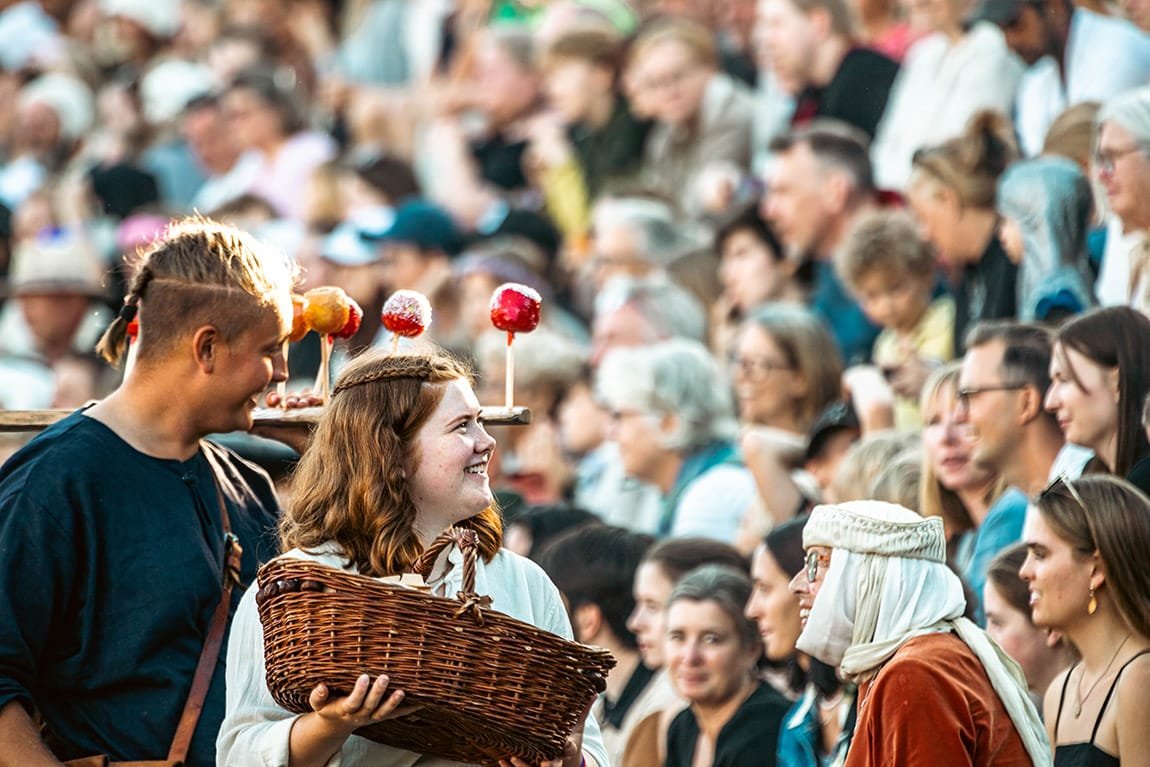
The festival’s markets remained a central attraction, with medieval food, drink, crafts and handmade goods creating one of the most recognisable parts of the event.
Official tickets
The official Medieval Week website is the main source for festival passes, programme information, individual event tickets and camping arrangements.
The Medieval Festival Band provides access to the main festival areas and allows visitors to book many individual programme events. Specific performances, workshops, jousting events and other limited-capacity activities may require separate tickets.
The 2027 ticket release and final programme should be checked through the official festival website once available.
Official event website: Medieval Week on Gotland (https://www.medeltidsveckan.se/)
Contact: info@medeltidsveckan.se
Tickets Sell Out
in Minutes
Maps
Contact
Video
FAQ's
What is Medieval Week on Gotland?
Medieval Week on Gotland is a large historical and cultural festival centred mainly in Visby, Sweden. It combines medieval markets, historical camps, jousting, crafts, music, theatre, lectures, food and hands-on activities. The festival has been organised since 1984 and is described by its organisers as Sweden's largest historical festival.
Do I need to wear medieval clothing to attend?
No, medieval clothing is not required for visitors. The organisers welcome people who arrive in historical costumes as well as visitors wearing ordinary modern clothing. Dressing historically can add to the atmosphere, but visitors can participate in the festival regardless of what they wear.
What can families do at Medieval Week?
Families can explore markets and historical camps, watch jousting and archery, visit children's activity areas and participate in age-specific games and performances. Previous programmes have included dedicated children's areas, adventure games, hero activities and family performances at the Medieval Arena.
Are all Medieval Week activities in one location?
No, the festival is spread across many parts of Visby and some activities also take place elsewhere on Gotland. Important locations include Strandgärdet, Nordergravar, Paviljongsplan, Almedalen, Visby Cathedral, historic ruins, markets and medieval taverns.
What makes Medieval Week different from a normal historical exhibition?
Medieval Week is an interactive festival rather than a static exhibition, allowing visitors to watch performances, enter historical camps, explore markets, attend workshops and take part in activities. Its programme combines living-history interpretation with music, theatre, food, crafts, storytelling and large public spectacles.