
Basler Fasnacht (Carnival in Basel) 2027 – Basel, Switzerland
Overview
Basler Fasnacht, also known as the Carnival of Basel, will take place from 15 to 17 February 2027 in Basel, Switzerland. Known locally as drei scheenschte Dääg — “the three most beautiful days” — it is Switzerland’s largest carnival and one of the country’s most distinctive cultural celebrations. The event lasts exactly 72 hours, beginning at 4:00 AM on Monday with Morgestraich and ending at 4:00 AM on Thursday with Ändstraich.
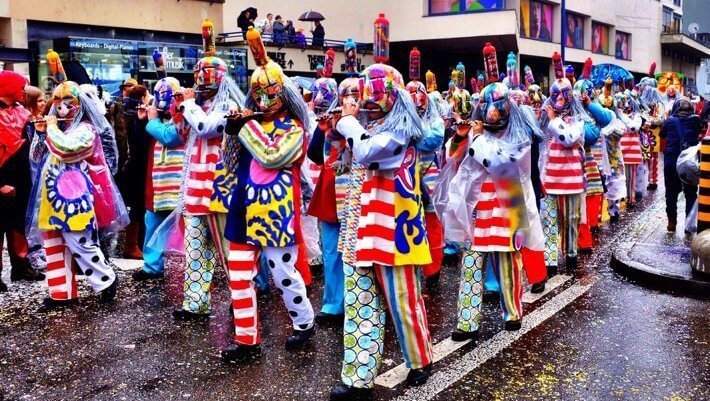
Unlike many European carnivals, Basler Fasnacht is not centred around one large parade or a single festival ground. The historic centre of Basel becomes the setting, with masked cliques, lanterns, piccolos, drums, Guggenmusik bands, satirical performances and decorated floats moving through the city’s streets.
The carnival was added to the UNESCO Representative List of the Intangible Cultural Heritage of Humanity in 2017. UNESCO recognised its combination of music, written and spoken expression, craftsmanship, costumes, masks and distinctive community traditions.
Make Your European Event Trip Easy with Eura Travelo
Traveling to Europe for a festival, concert, sporting event, or business occasion involves more than simply choosing an event. Eura Travelo helps bring your journey together with support for travel planning, accommodation, event arrangements, and local experiences. Save time, reduce the hassle, and enjoy a smoother journey from planning to the event itself.
Cultural Significance & Origins
Basler Fasnacht has developed over centuries, although the exact origins of the tradition are complex. The modern event is strongly associated with Basel’s organised carnival societies, known as Cliquen, which prepare their costumes, lanterns, music and satirical themes throughout the year.
The first officially permitted Morgestraich took place in 1835. At that time, participants carried burning torches through the city. Pole-mounted lanterns appeared later, particularly after open flames were restricted, and the large illuminated procession lanterns that have become a defining feature of Basel Carnival developed during the 19th century.
The event also has a strong tradition of social commentary. Each clique chooses a Sujet, or theme, and presents it through its lantern, costumes, music and satirical material. Contemporary events, personalities, social developments and local issues can become subjects for sharp humour and artistic criticism.
Traditions, Rituals & Customs
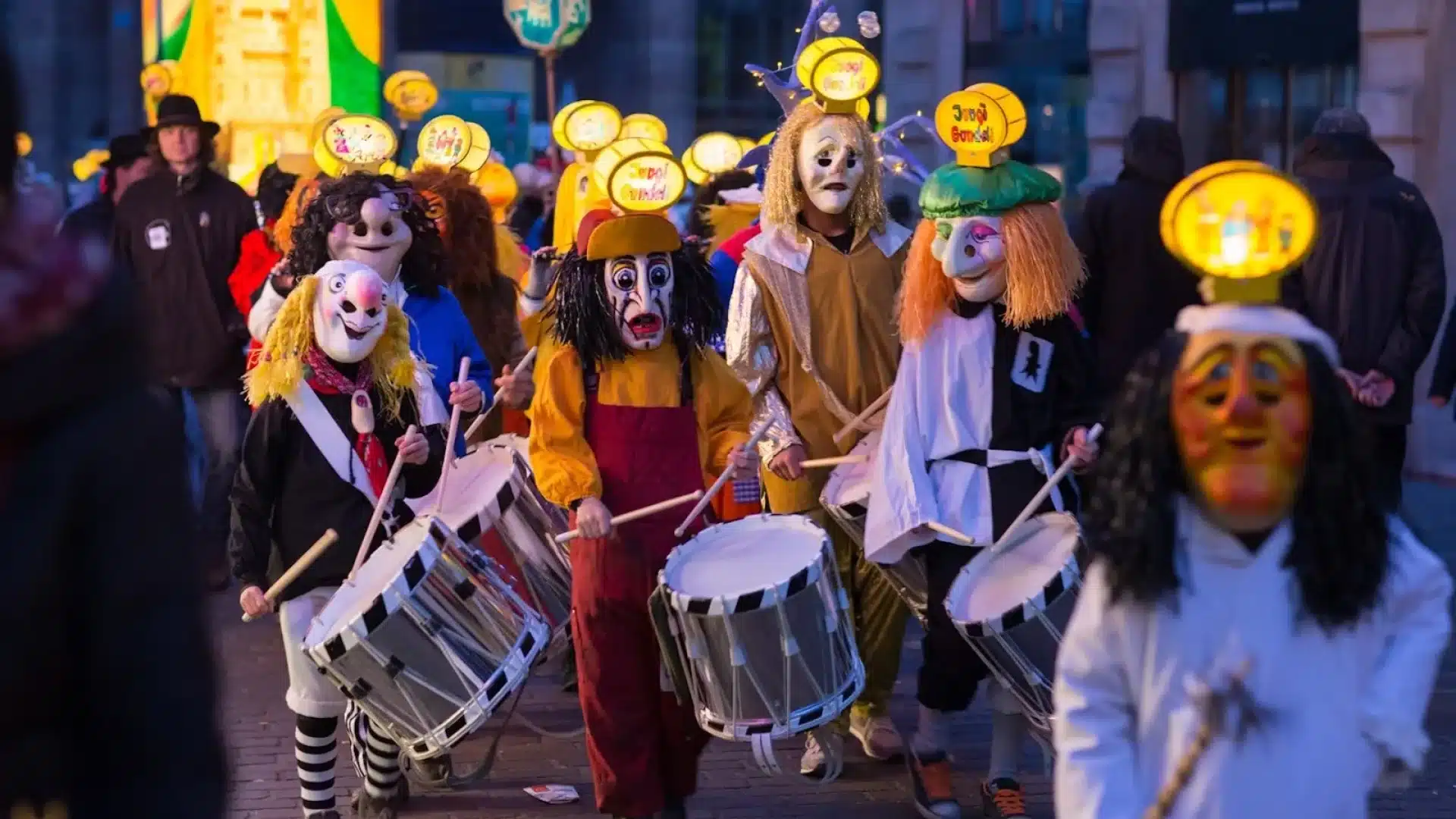
The most famous tradition is Morgestraich, which begins precisely at 4:00 AM on Monday, 15 February 2027. The lights in the inner city are switched off, leaving the historic centre in darkness. Thousands of spectators then see the first illuminated lanterns appear as the cliques begin marching through the streets accompanied by piccolos and drums.
The traditional command “Morgestraich: Vorwärts, marsch!” signals the beginning of the procession. The combination of darkness, hand-painted lanterns and the sound of hundreds of musicians creates one of the most recognisable scenes of the Basel Carnival.
During the following 72 hours, visitors encounter different forms of Fasnacht. The two major Cortèges take place on Monday and Wednesday afternoons, while Tuesday focuses particularly on children’s carnival and the evening atmosphere created by Guggenmusik groups.
Another important tradition is the Schnitzelbank. On Monday and Wednesday evenings, groups perform satirical songs and verses in Basel restaurants and other venues, commenting humorously on events and personalities from the previous year. Understanding some German or Basel dialect can make these performances easier to appreciate, although the atmosphere itself is accessible even to international visitors.
What to Expect at the Festival
Visitors should expect an event that feels more like a city-wide cultural transformation than a conventional ticketed carnival. There is no single entrance gate and no central festival field. Instead, the old town and surrounding streets become part of the celebration.
The atmosphere changes throughout the three days. Early Monday morning is dominated by the mysterious darkness and lanterns of Morgestraich. Monday afternoon brings the first major Cortège, Tuesday offers children’s activities and Guggenmusik, while Wednesday repeats the main procession before the final hours lead towards Ändstraich.
The event can also be noisy and extremely busy. Piccolos, drums and Guggenmusik are an integral part of Fasnacht, while some streets become particularly crowded during the main processions. Visitors should therefore expect a lively environment rather than a quiet sightseeing experience.
Date & Schedule
Basler Fasnacht 2027 runs from Monday 15 February until Thursday morning, 18 February, although the official carnival dates are generally given as 15–17 February 2027 because the core celebration is three days long. The event begins at 4:00 AM Monday and ends at exactly 4:00 AM Thursday.
The key programme traditionally follows this pattern:
Monday, 15 February: Morgestraich at 4:00 AM, followed by the first major Cortège in the afternoon and Schnitzelbank performances in the evening.
Tuesday, 16 February: Kinderfasnacht takes centre stage during the day, while Guggenmusik becomes particularly prominent in the evening.
Wednesday, 17 February: The second major Cortège takes place during the afternoon, followed by another evening of Schnitzelbängg and late-night carnival activity.
Thursday, 18 February: Ändstraich takes place at 4:00 AM, formally bringing the 72-hour Fasnacht to an end. The exact 2027 route details and detailed programme should be checked with the Fasnacht Committee as the event approaches.
Visiting this event? Don’t miss out on these amazing activities and local experiences while you’re here.
Traditional Dress, Masks & Lanterns
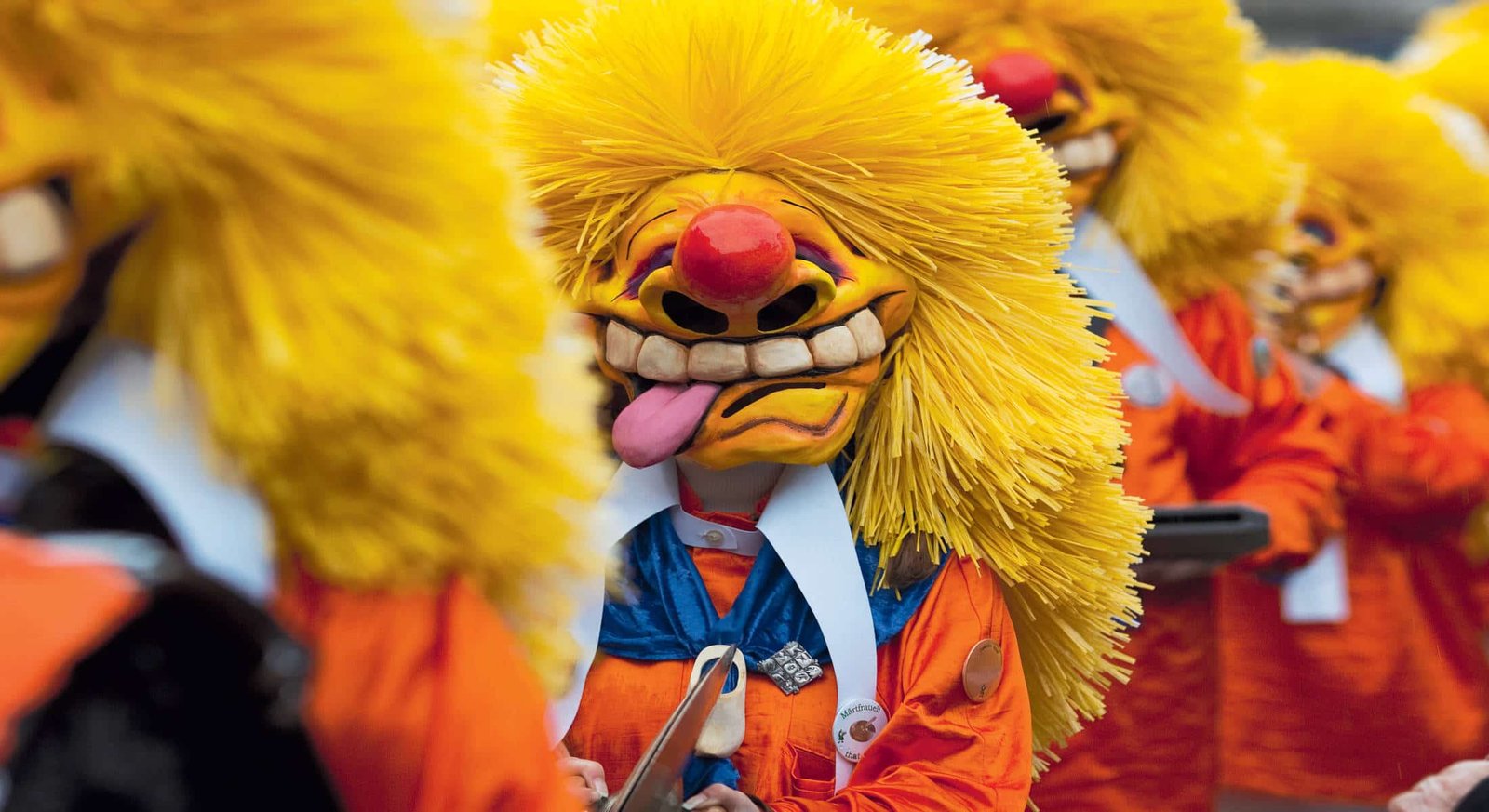
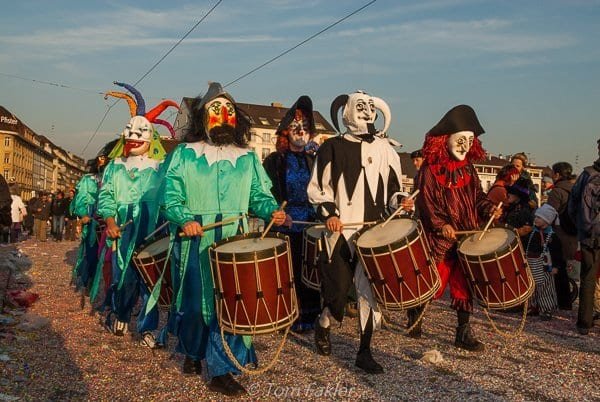
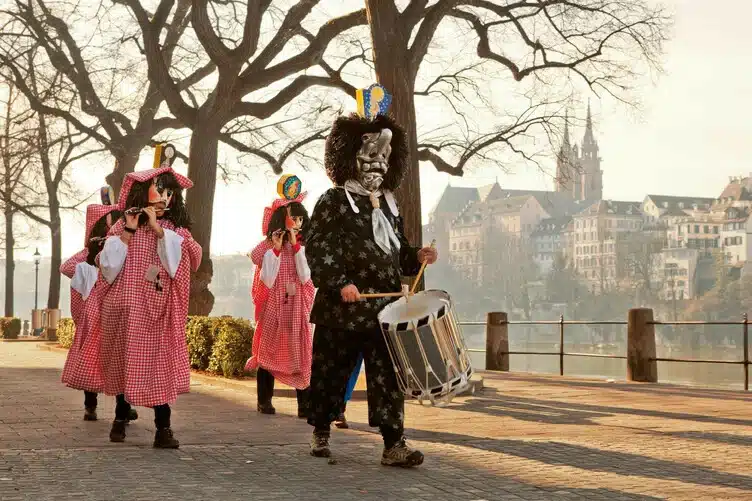
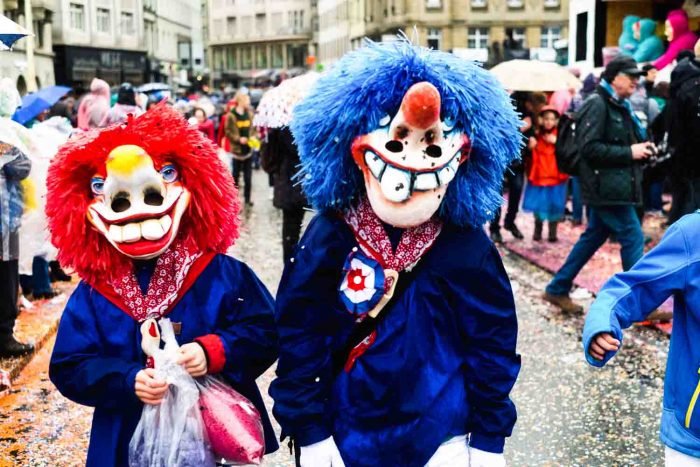
The visual identity of Basler Fasnacht is one of its most important cultural elements. Active participants wear elaborate costumes and masks known as Larven, which conceal their identities and help create the unusual atmosphere of the event.
The large lanterns carried or pulled by the cliques are equally important. They are individually designed around the year’s Sujet and can contain painted scenes, caricatures, lettering and satirical references. During Morgestraich, these lanterns are illuminated while the rest of the city centre remains dark.
Visitors should not confuse these costumes with ordinary carnival fancy dress. For active Fasnacht participants, the costumes, masks, lanterns and music are the result of extensive preparation and belong to a structured cultural tradition.
Music, Guggenmusik & Schnitzelbängg
Music is at the heart of Basler Fasnacht. The traditional sound comes from piccolo players and drummers, particularly during Morgestraich and the Cortèges. Different cliques move through the city in organised formations, playing traditional carnival marches.
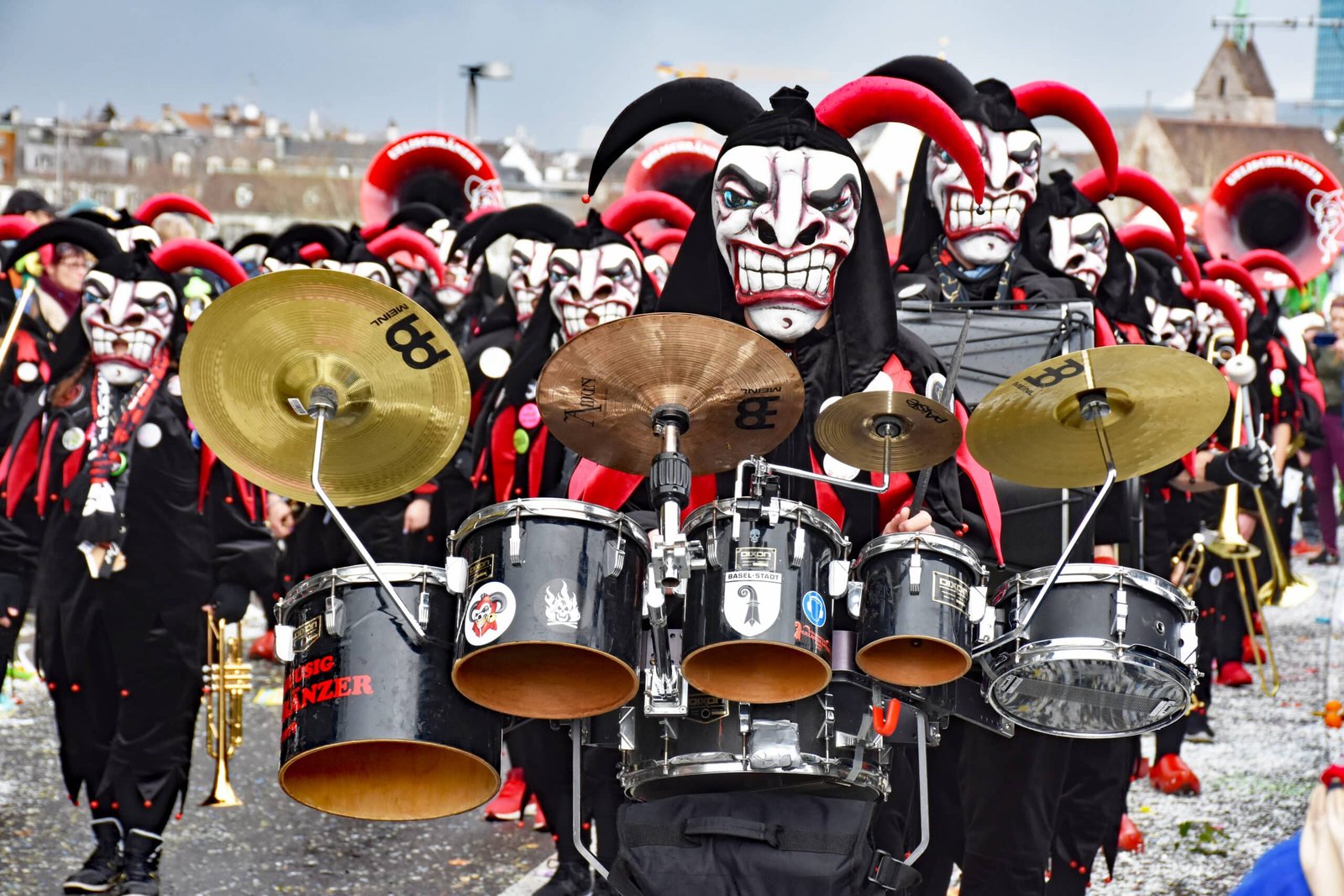
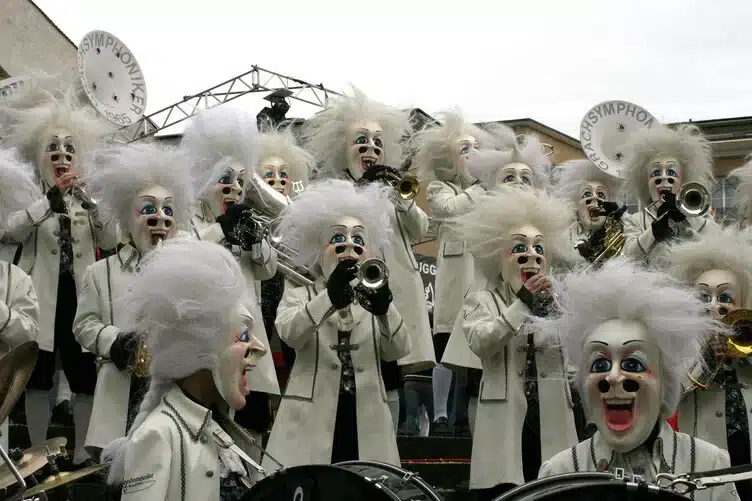
Guggenmusik adds another musical dimension. These brass and percussion groups typically perform louder, more powerful arrangements and become particularly visible on Tuesday evening. Their performances create a very different atmosphere from the quieter, more traditional sound of the piccolo players.
The third major musical and literary tradition is the Schnitzelbank. These groups use songs, rhymes and humorous verses to comment on current events. Their performances are usually held in restaurants, bars and dedicated venues and are one of the best ways to experience the satirical side of Basel Carnival.
Location & Festival Areas
Basler Fasnacht takes place throughout Basel’s city centre and surrounding neighbourhoods, rather than at a single venue. Important areas during the celebrations include Barfüsserplatz, Marktplatz, Freie Strasse, Falknerstrasse, Rümelinsplatz and Münsterplatz.
During Morgestraich, the busiest viewing areas traditionally include Barfüsserplatz, Marktplatz, Rümelinsplatz, Falknerstrasse and Freie Strasse. Visitors looking for somewhat less concentrated crowds can consider areas such as Leonhardskirchplatz, Martinskirchplatz, Nadelberg or Münsterplatz.
The old town is particularly important because many clique cellars are located in and around its narrow streets. Areas around Spalenberg, Nadelberg, Imbergässlein and Pfeffergässlein have traditionally contained numerous clique cellars where participants and visitors can experience another side of Fasnacht.
Getting to the Festival
Basel is well connected to the Swiss and European railway network, making train travel one of the most convenient ways to reach the city. Basel SBB is the city’s main railway station, with connections to destinations throughout Switzerland as well as France and Germany.
For visitors arriving by air, EuroAirport Basel-Mulhouse-Freiburg serves the Basel region and is located close to the city. Local buses connect the airport with Basel.
Once in Basel, public transport is particularly useful, although carnival crowds and temporary street closures can affect routes. For the central Fasnacht areas, walking is often the easiest way to move between locations, but visitors should expect significant crowds and occasional restrictions during processions.
Where to Stay Nearby
Staying in central Basel gives visitors the easiest access to the main Fasnacht areas, particularly if they want to experience Morgestraich at 4:00 AM. Hotels around the Old Town, Barfüsserplatz, Marktplatz and nearby districts can put major carnival activity within walking distance.
Accommodation can become highly sought after because Fasnacht attracts visitors from outside Basel as well as international travellers. Booking well ahead is therefore sensible, especially if the primary purpose of your trip is to experience all three days.
Visitors who prefer a quieter stay can also consider areas outside the immediate Old Town and use Basel’s public transport network to reach the carnival centre.
What Visitors Can Participate In
Visitors can watch the processions, listen to the musicians, explore the decorated streets, attend suitable Schnitzelbank performances and experience the atmosphere around the clique cellars. The carnival is not simply a spectacle for spectators; the whole city becomes part of the event.
One particularly important part of participating respectfully is understanding the relationship between visitors and active Fasnacht participants. During processions, cliques need room to move, and spectators should not obstruct their route. The official visitor guidance specifically asks people to give costumed participants the right of way.
Visitors can also purchase the official Blaggedde, or carnival badge. The badge is more than a souvenir: proceeds contribute to the costs of Fasnacht and support the cliques and creative participants, helping maintain the event’s independence.
Things to Do Before or After the Festival
Basel is an attractive destination even outside the carnival period. Visitors can explore the Old Town, walk along the Rhine, visit museums and see historic buildings around Münsterplatz and the city centre.
Basel Cathedral is one of the city’s most recognisable landmarks and stands directly in the historic centre. Its location also makes the surrounding Münsterplatz a useful area to explore while experiencing the carnival.
Visitors interested in Basel’s cultural history can also explore museums dedicated to art, history and local traditions. The Museum der Kulturen Basel has presented exhibitions covering the carnival’s costumes, lanterns, masks, instruments and historical documents.
Local Food & Restaurants
Basel’s restaurants become particularly important during Fasnacht because many traditional carnival activities take place in restaurants and cellars. Monday and Wednesday evenings are especially associated with Schnitzelbank performances, when groups move between venues to perform their satirical songs.
Visitors can also try regional Swiss and Basel specialities during their stay. Restaurants in and around the Old Town provide convenient places to warm up, eat between carnival activities and experience the city away from the busiest streets.
Because Fasnacht attracts large numbers of people, restaurants can become busy during peak periods. Visitors attending a specific Schnitzelbank performance should check whether the venue requires reservations or has a special arrangement for the carnival period.
Ticket Information & Access
Basler Fasnacht itself does not operate like a conventional ticketed festival. Visitors do not purchase a general admission ticket to enter the city or watch the major outdoor processions.
However, the official Blaggedde is an important part of the tradition. It helps finance Fasnacht and supports the creative work of the participating groups. The official Basel Carnival Committee describes the badge as a contribution towards keeping the event independent from political and economic influence.
Individual restaurants, Schnitzelbank performances and certain indoor events may have their own admission or reservation arrangements. These should be checked directly with the relevant venue when planning a detailed evening itinerary.
Official Event Information
The Basler Fasnacht 2027 is officially scheduled for 15–17 February 2027, beginning with Morgestraich at 4:00 AM on Monday and concluding with Ändstraich at 4:00 AM on Thursday, 18 February. The event is organised with the support of Basel’s Fasnacht Committee and takes place throughout the city.
The official Basel Carnival Committee is the main source for announcements, organisational information, the Blaggedde, Cortège information and other updates. Basel Tourism also provides visitor-oriented information about the main traditions and locations.
Official Basel Carnival Committee: https://www.fasnachts-comite.ch/en
Tickets Sell Out
in Minutes
Maps
Contact
Video
FAQ's
When is Basler Fasnacht 2027?
Basler Fasnacht 2027 will take place from 15 to 17 February 2027, with the celebration beginning at exactly 4:00 AM on Monday, 15 February, and ending at exactly 4:00 AM on Thursday, 18 February. Although the final morning falls on Thursday, the carnival is officially described as a three-day, 72-hour event. The dates are determined by Basel's traditional carnival calendar and are officially confirmed for 2027.
What time does Morgestraich start in 2027?
Morgestraich begins at 4:00 AM on Monday, 15 February 2027. The lights in Basel's inner city are switched off, leaving the illuminated lanterns carried by the carnival cliques as the main source of light. At the traditional command “Morgestraich: Vorwärts, marsch!”, the piccolos and drums begin playing and the cliques move through the streets.
How long does Basler Fasnacht last?
Basler Fasnacht lasts exactly 72 hours. It starts with Morgestraich at 4:00 AM on Monday and concludes with Ändstraich at 4:00 AM on Thursday. Within those three days, the programme includes two major Cortèges, children's carnival, Guggenmusik performances, Schnitzelbank evenings, informal street activity and numerous smaller traditions.
What happens during Basler Fasnacht?
The three days contain several different traditions rather than one continuous parade. Monday begins with Morgestraich and continues with the first Cortège in the afternoon and Schnitzelbank performances in the evening.
What are Schnitzelbängg?
Schnitzelbängg are satirical performances traditionally presented in Basel restaurants and other venues, particularly on Monday and Wednesday evenings. Performers use songs, rhymes and humorous verses to comment on political, social and local events from the previous year.
Where are the best areas to experience Morgestraich?
The busiest traditional viewing areas include Barfüsserplatz, Marktplatz, Rümelinsplatz, Falknerstrasse and Freie Strasse. These locations can become extremely crowded, particularly around the beginning of Morgestraich. Visitors looking for a somewhat less concentrated atmosphere can consider areas such as Leonhardskirchplatz, Martinskirchplatz, Nadelberg or Münsterplatz.