San Lorenzo Fiestas 2027 – Huesca, Spain
Overview
The San Lorenzo Fiestas 2027 will take place from 9 to 15 August 2027 in Huesca, Aragón, celebrating the city’s patron saint, San Lorenzo. Declared a Festival of National Tourist Interest, the celebrations transform Huesca for a full week with traditional dances, religious ceremonies, concerts, street entertainment, peñas, folk music, children’s activities, sporting events and other festivities.
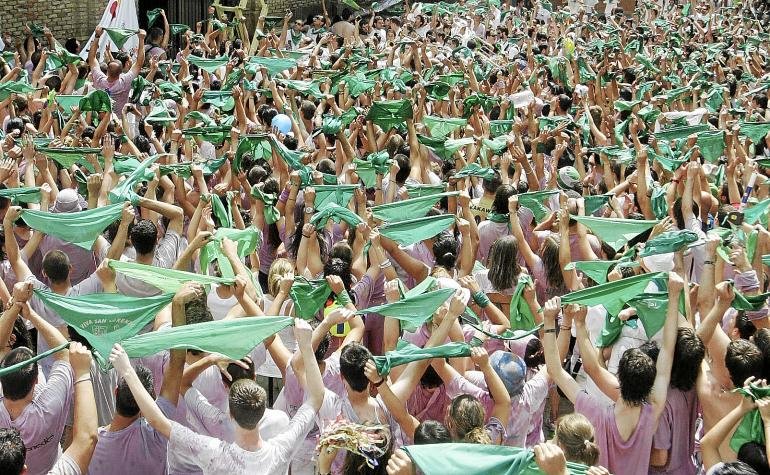
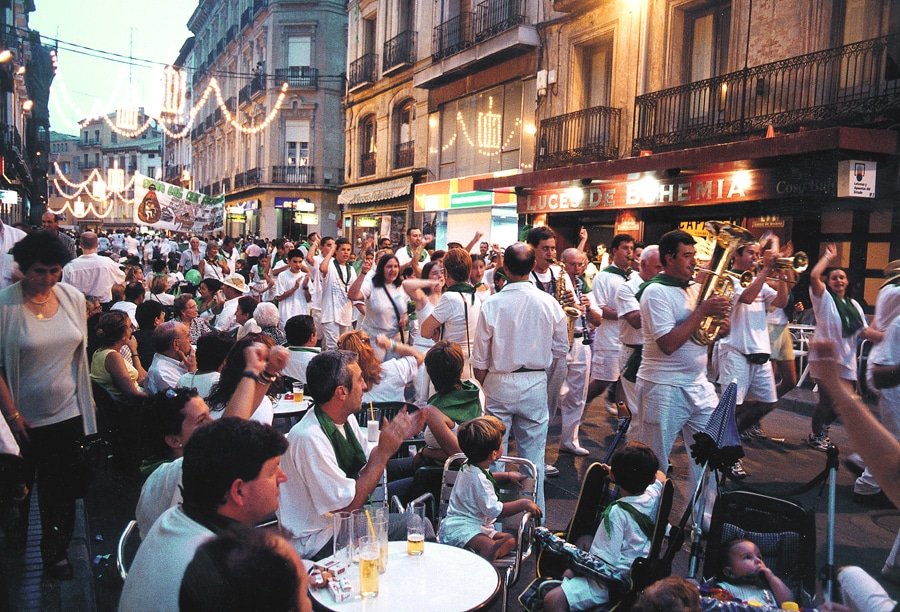
One of the most recognisable features of the festival is the city’s transformation into a sea of white and green. Basil is traditionally associated with the celebrations, while residents and visitors fill the streets throughout the week. The festival combines deeply rooted local traditions with a large contemporary programme designed for different generations.
The main celebrations centre on 9 August, when the opening rocket signals the beginning of the fiestas, and 10 August, the feast day of San Lorenzo, when some of Huesca’s most important traditional ceremonies take place.
Make Your European Event Trip Easy with Eura Travelo
Traveling to Europe for a festival, concert, sporting event, or business occasion involves more than simply choosing an event. Eura Travelo helps bring your journey together with support for travel planning, accommodation, event arrangements, and local experiences. Save time, reduce the hassle, and enjoy a smoother journey from planning to the event itself.
Cultural Significance & Origins
San Lorenzo is the patron saint of Huesca, and the annual fiestas are deeply connected with the city’s religious and cultural identity. The celebrations bring together Catholic traditions, Aragonese folklore, local associations and modern public entertainment.
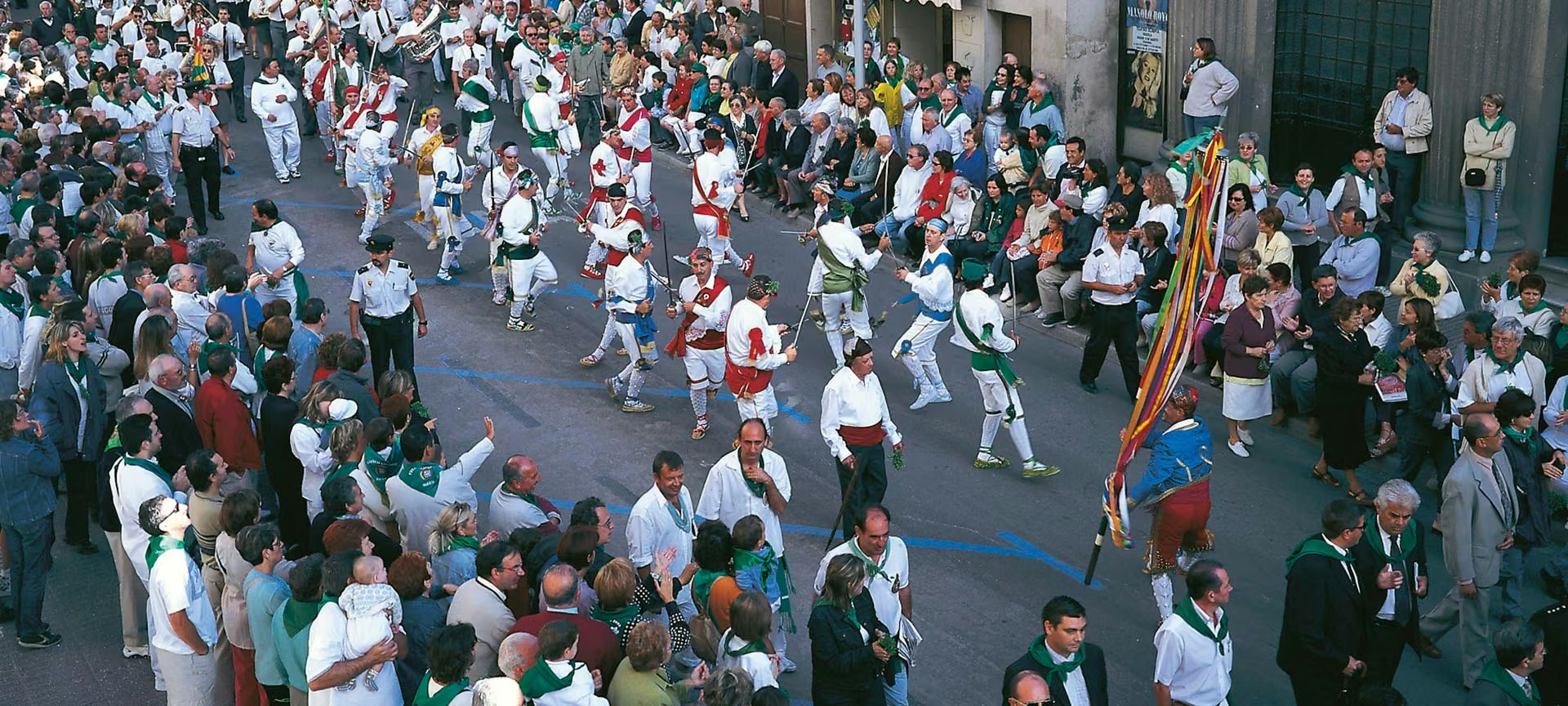
The city’s tourism office highlights the long-standing tradition of the Danzantes de Huesca, whose performances include dances with swords, sticks and ribbons. Their appearance on the morning of 10 August is one of the defining cultural moments of the week.
The festival has also developed into a major gathering for the people of Huesca and visitors from elsewhere in Aragón and Spain. Its National Tourist Interest designation recognises the historical and cultural character of the celebrations.
Traditions, Rituals & Customs
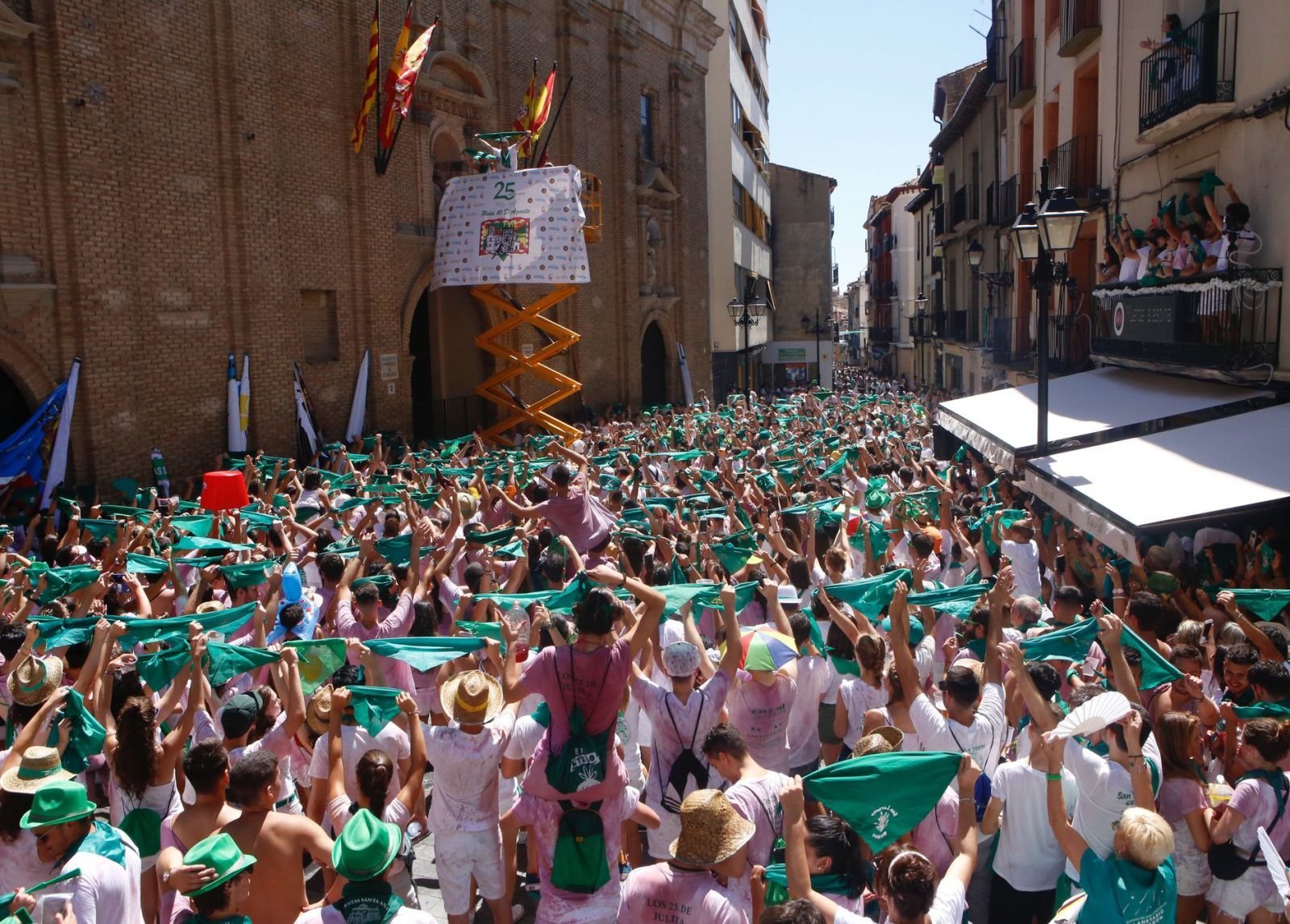
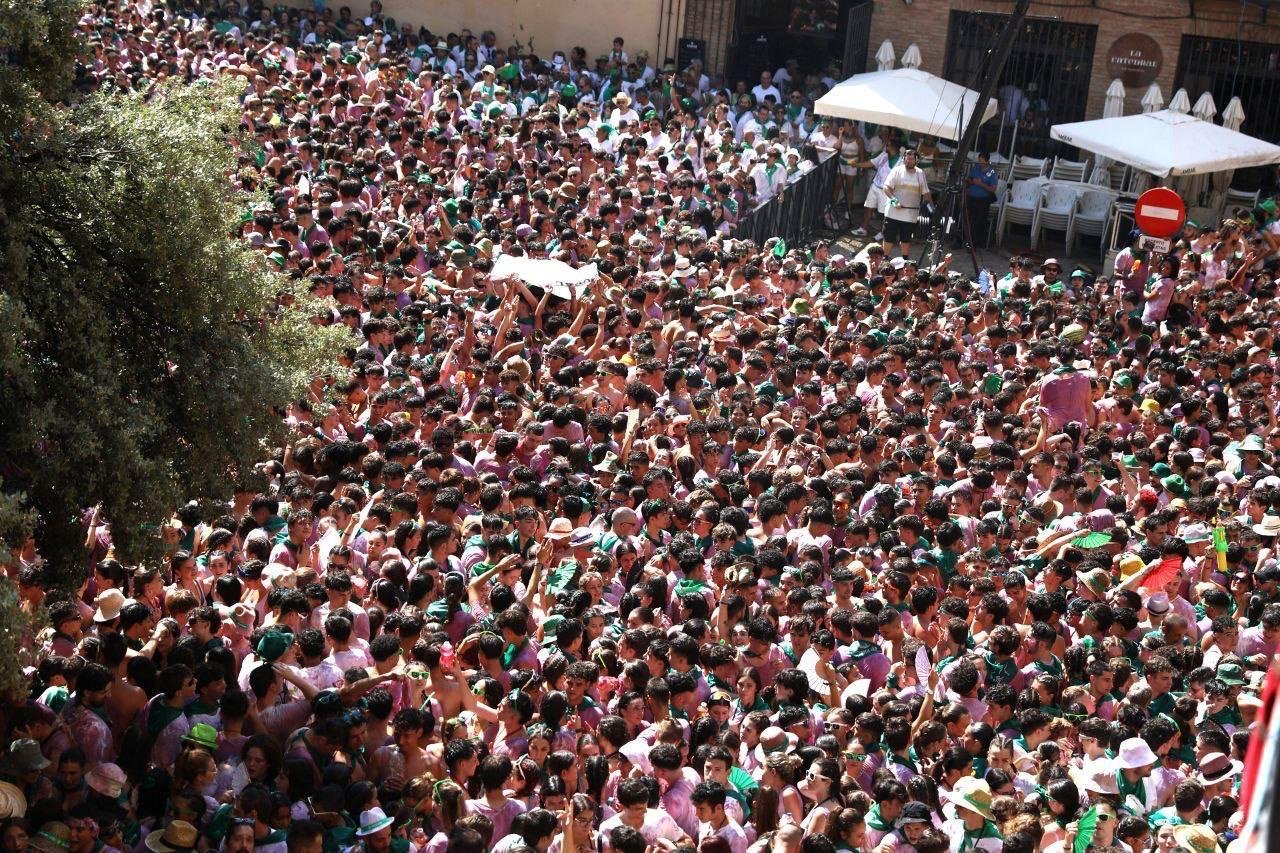
The celebrations traditionally begin at midday on 9 August with the firing of the chupinazo, or opening rocket, from the Town Hall area in the Plaza de la Catedral. Large crowds gather for the moment, while the local peñas and their musical groups then take to the streets.
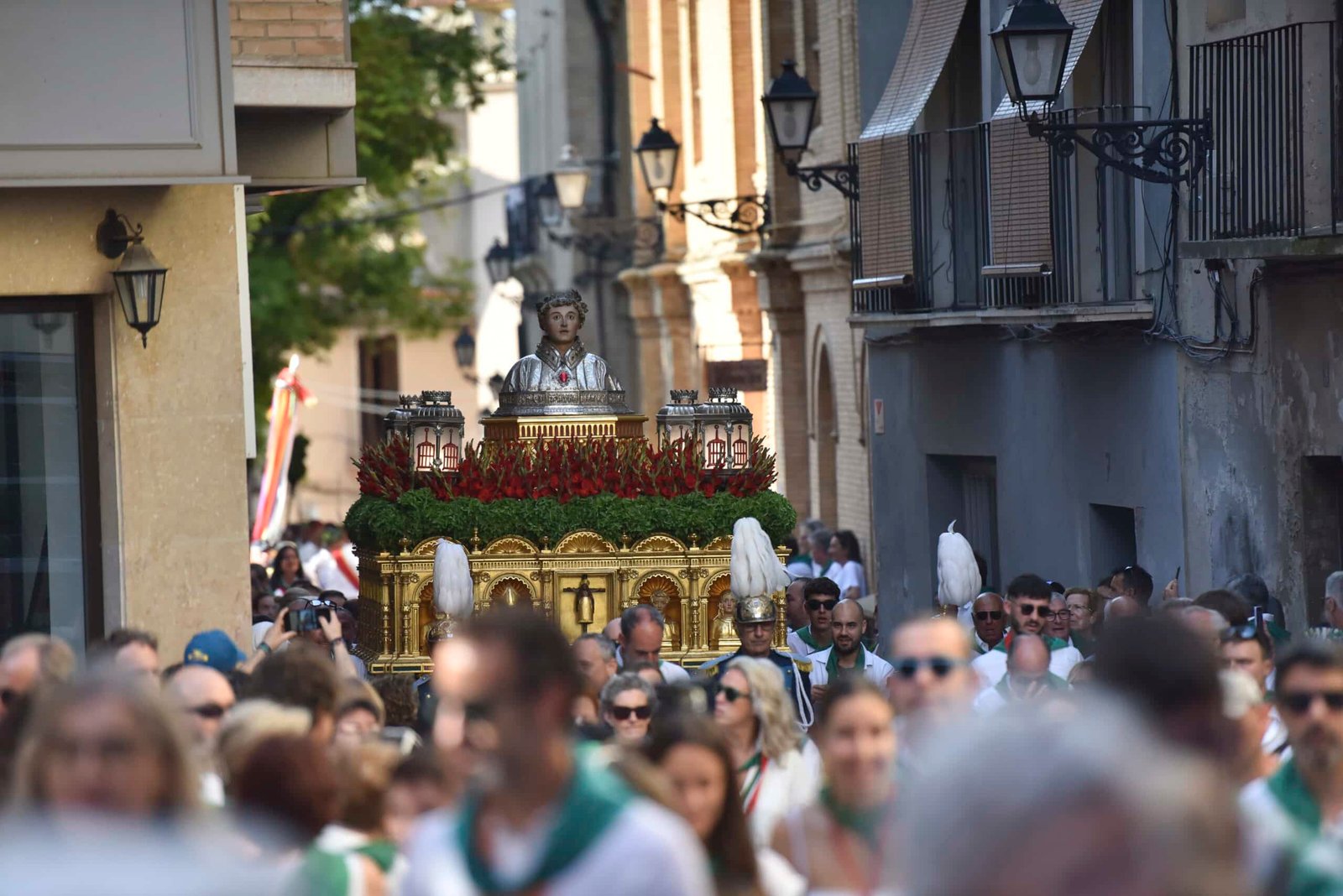
On 10 August, the Danzantes de Huesca perform their traditional dances in the Plaza de San Lorenzo. Their repertoire includes the Dance of Swords, stick dances and ribbon dances, accompanied by traditional music. The performance is followed by the procession of San Lorenzo through the city.
The Ofrenda de Flores y Frutos, held on 15 August, traditionally brings the festivities toward their conclusion. Participants take floral and agricultural offerings to the Basilica of San Lorenzo, providing one of the more ceremonial moments of the final day.
White and green clothing is strongly associated with the festival. The smell of basil around the city is another familiar part of the San Lorenzo atmosphere.
What to Expect at the Festival
San Lorenzo is much more than a single procession or religious celebration. Throughout the week, Huesca hosts concerts, charangas, folk performances, dance, street entertainment, children’s activities, sporting events, peña gatherings and evening celebrations.
The peñas recreativas oscenses are particularly visible during the fiestas. Their charangas provide music in the streets, accompany processions and participate in numerous activities around the city.
Recent programmes have also included theatre, circus, jota performances, traditional music gatherings and outdoor concerts. For example, the 2026 programme included Aragonese bagpipe groups, jota performances, children’s entertainment and concerts spread across several city locations. These are examples of the festival’s established format, not confirmed 2027 events.
Date & Schedule
San Lorenzo Fiestas 2027 are confirmed for Monday 9 August through Sunday 15 August 2027. The dates correspond with the traditional annual celebration of Huesca’s patron saint.
The opening day on 9 August traditionally begins with the midday rocket, while 10 August is the principal feast day and includes the Danzantes and procession. The final day on 15 August traditionally features the floral and fruit offering.
Visiting this event? Don’t miss out on these amazing activities and local experiences while you’re here.
Main Events & Programme
The chupinazo on 9 August is the traditional starting point and one of the most crowded moments of the festival. It takes place around the Plaza de la Catedral, where thousands of people traditionally gather to welcome the fiestas.
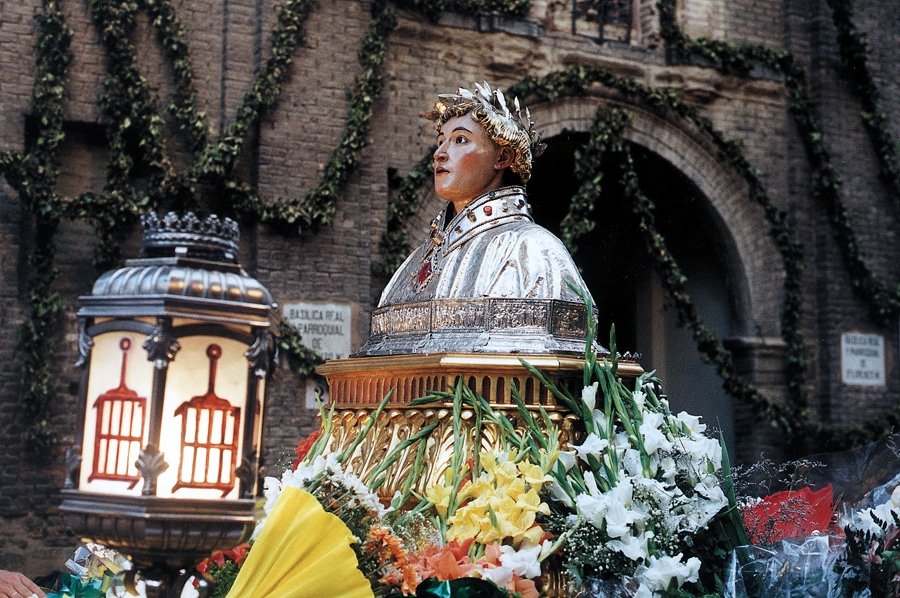
The Danzantes de Huesca and the procession of San Lorenzo are central to 10 August. The dancers perform in the morning before the religious procession carries the image of the saint through the city.
Other recurring elements include concerts, open-air dances, charangas, folk festivals, peña activities, children’s programmes and the annual fairground. Recent official programmes have also included sporting events, street performances and activities distributed through different neighbourhoods.
Bullfighting and vaquillas have also appeared in recent San Lorenzo programmes. These activities form part of the established festival programme but may not appeal to every visitor, so travellers should check the final schedule when planning their visit.
Traditional Dress, Music & Local Identity
White and green are the dominant colours of San Lorenzo. Residents commonly wear white clothing with green accessories during the week, creating a distinctive visual identity across the city.
Music is equally important. Charangas accompany the peñas and street celebrations, while traditional Aragonese music, jota and dance appear alongside contemporary concerts and evening entertainment. Recent programmes have featured groups such as the Banda de Música de Huesca and traditional folk ensembles.
The festival therefore offers visitors an opportunity to see both formal folklore and the more spontaneous street culture associated with Huesca’s peñas.
Location & Festival Areas
San Lorenzo is a city-wide festival, rather than an event contained within one venue. Activities take place around central Huesca and in different neighbourhoods.
The Plaza de la Catedral is particularly important for the opening celebrations, while Plaza de San Lorenzo is associated with the traditional Danzantes and the Basilica of San Lorenzo. The city centre also hosts concerts, charangas and other public activities.
Recent official programmes have used locations including Plaza de Navarra, Plaza Luis López Allué, Plaza General Alsina, Parque Miguel Servet, the Palacio de Congresos and other neighbourhood spaces. The exact distribution for 2027 will depend on the final programme.
The Basilica of San Lorenzo is especially significant during the religious celebrations and is located at Plaza de San Lorenzo in central Huesca. Basílica de San Lorenzo
Getting to the Festival
Huesca is well connected with other cities in Aragón and northern Spain. Visitors can reach the city by road and rail, with Zaragoza providing one of the most useful transport connections for travellers arriving from further away.
The compact central area makes walking practical once you arrive in Huesca. This is particularly useful during San Lorenzo because many streets and public spaces become busy with festival activities.
Visitors travelling by car should expect changes to traffic and parking arrangements around the busiest events. Temporary restrictions can be introduced for processions, street activities and other large gatherings, so public transport or walking can be more convenient during the main celebrations.
Where to Stay Nearby
Staying in central Huesca provides the easiest access to the main San Lorenzo activities. Hotels and apartments around the historic centre place visitors within walking distance of the Basilica, Plaza de la Catedral and other major festival areas.
Accommodation can become busy during the second week of August because San Lorenzo is one of Huesca’s principal annual celebrations. Booking well in advance is therefore useful for visitors who want to stay throughout the festival.
For travellers who prefer a quieter location or find central accommodation unavailable, surrounding towns can provide alternatives, although a car or regional transport may then be necessary.
What Visitors Can Participate In
Visitors can freely experience many of the public aspects of San Lorenzo, including street performances, concerts, processions and traditional celebrations. The atmosphere is particularly social, with residents and visitors sharing the public spaces rather than simply watching from designated spectator areas.
The traditional celebrations also provide opportunities to experience Aragonese folklore through the Danzantes, jota, charangas and other cultural groups. The city tourism office specifically highlights the festival as suitable for different age groups.
Some activities, such as particular sporting events, bullfighting or organised entertainment, may have their own access arrangements. The final 2027 programme should be consulted for individual events.
Things to Do Before or After the Festival
Huesca’s historic centre is worth exploring beyond the festival programme. Visitors can discover the city’s cathedral, historic streets, museums and religious heritage before returning to the festivities.
The surrounding province is particularly attractive for travellers interested in nature. The nearby Sierra de Guara offers hiking, climbing, canyoning and other outdoor activities, while the wider area provides opportunities for walking and cycling. Huesca tourism also highlights nearby hermitages and the Castle of Montearagón as excursions from the city.
A longer trip can therefore combine San Lorenzo with the landscapes and villages of the Huesca province rather than limiting the visit to the seven-day festival.
Local Food & Restaurants
Huesca’s restaurants and tapas bars provide plenty of opportunities to try Aragonese cuisine during the festival. The central streets are particularly convenient for combining meals with evening celebrations.
The local food scene ranges from traditional restaurants to casual tapas and modern cuisine. Visitors should consider making restaurant reservations in advance for popular evenings because the city attracts substantial numbers of visitors during San Lorenzo.
The festival itself also creates additional food and drink opportunities through bars, peña activities and temporary refreshment areas.
Ticket Information & Access
The main San Lorenzo celebrations take place in public streets and squares, and many of the outdoor cultural and festive activities are free to attend. The festival is fundamentally a city-wide public celebration rather than a ticketed festival requiring a general admission pass.
Certain individual events may have separate admission arrangements. Bullfighting events, for example, can require tickets, while particular performances or venues may use their own access systems.
The 2027 ticketing information for individual paid activities has not yet been published.
Official Event Information
The San Lorenzo Fiestas are organised in Huesca with the participation of the city authorities, local cultural organisations, peñas and other community groups. The official programme is normally released closer to the festival and provides the definitive information about times, venues and individual events.
Huesca Tourism – San Lorenzo Fiestas: https://www.huescaturismo.com/fiestas-de-san-lorenzo/
The 2027 dates are already confirmed for 9–15 August, but the detailed programme should be checked closer to the event.
Tickets Sell Out
in Minutes
Maps
Contact
Video
FAQ's
What is San Lorenzo in Huesca?
San Lorenzo is Huesca's major annual festival in honour of the city's patron saint, Saint Lawrence. It combines religious ceremonies and centuries-old traditions with concerts, folk performances, street entertainment, peñas, children's activities, sports and other public celebrations. The festival has been declared a Festival of National Tourist Interest.
Who are the Danzantes de Huesca?
The Danzantes are traditional dancers associated with Huesca's San Lorenzo celebrations. Their performances include sword, stick and ribbon dances and are accompanied by traditional music. Their appearance on the morning of 10 August is one of the festival's most important cultural traditions.
What should I wear to San Lorenzo?
White and green are the traditional colours associated with the festival. Many residents wear white clothing with green accessories throughout the week, so visitors who want to participate in the local atmosphere can adopt the same colours.
Are there concerts during San Lorenzo?
Yes. Music is a major part of the festival, ranging from contemporary concerts and orchestras to traditional jota, folk music and charanga performances. The exact 2027 artists and concert schedule have not yet been announced.
How long should I stay in Huesca for San Lorenzo?
A stay of three to four days can cover some of the major traditional events while leaving time to explore Huesca itself. Staying for the full 9–15 August period provides the opportunity to experience both the opening celebrations and the closing Ofrenda de Flores y Frutos.
What can I see around Huesca after the festival?
The surrounding province offers mountain landscapes, hiking and outdoor activities, particularly around the Sierra de Guara. Visitors can also explore historic sites such as the Castle of Montearagón and nearby religious and rural attractions.