




Lovebird Festival 2027 – Jazz & Music Germany
What to expect in 2027
Lovebird Festival 2027 will return to Düsseldorf from 3–6 June 2027 for four days of jazz, contemporary music, soul, funk, electronic sounds, global music and cultural events. The festival is built around musical discovery rather than a single large festival site, with performances taking place at concert halls, clubs, churches, museums, outdoor stages, riverside locations and other unusual venues throughout Düsseldorf. The official festival website has already confirmed the 2027 dates, while the detailed 2027 programme has not yet been released.
The festival’s 2026 edition provides a useful indication of what visitors can expect in 2027. It featured 41 acts across 20 locations, representing 12 main genres, with 12 emerging or developing acts and nine special programmes. More than 10,000 visitors attended, while more than half of the programme was free.
Lovebird combines established international musicians with Düsseldorf’s local jazz and independent music scene. The festival also places strong emphasis on newcomers, cross-genre projects and artists who connect jazz with soul, hip-hop, electronic music, Latin American traditions, African influences, pop and experimental music.
Make Your European Event Trip Easy with Eura Travelo
Traveling to Europe for a festival, concert, sporting event, or business occasion involves more than simply choosing an event. Eura Travelo helps bring your journey together with support for travel planning, accommodation, event arrangements, and local experiences. Save time, reduce the hassle, and enjoy a smoother journey from planning to the event itself.
The 2027 edition is therefore expected to retain the festival’s city-wide format. Instead of staying at one location throughout the weekend, visitors can build their own schedule and move between venues, discovering different neighbourhoods and cultural spaces along the way.
The festival also has a strong cultural programme beyond concerts. Previous editions included panel discussions, workshops, poetry, film screenings, music-history tours, exhibitions, karaoke-style events and guided bird walks.
Event dates
Lovebird Festival 2027 will take place from 3–6 June 2027 in Düsseldorf, Germany.
The four-day festival will run from Thursday through Sunday, with concerts and special programmes distributed across different venues in the city. The official website has published the dates as its 2027 save-the-date announcement, but individual artist schedules and exact performance times have not yet been announced.
Based on previous editions, the programme is likely to include daytime activities alongside evening concerts. The 2026 schedule included performances beginning around midday and continuing into the late evening, allowing visitors to attend several events in one day if venues and travel times permit.
Visitors planning a full festival weekend should allow additional time between performances because Lovebird’s venues are spread throughout Düsseldorf rather than concentrated in one enclosed festival ground.
Visiting this event? Don’t miss out on these amazing activities and local experiences while you’re here.
Venue & festival site
Lovebird Festival does not use a single permanent festival site. Instead, Düsseldorf itself becomes the festival environment, with concerts and cultural programmes hosted in established music venues, cultural institutions, churches, museums, clubs, public squares and riverside spaces.
In 2026, the festival used 20 locations across Düsseldorf. These included:
- Ampere
- a&o medien
- Cinema Filmkunstkino
- Dreischeibenhaus
- Em Pöötzke
- Goethe-Museum Düsseldorf
- Johanneskirche – Stadtkirche
- Kunst- und Kulturstrand am Tonhallenufer
- Malkasten
- Maxhaus
- Palais Wittgenstein
- Rathauskeller
- Ratinger Hof
- Rudas Studios
- Schleuse Zwei / Bilker Bunker
- Sparda-Bühne
- Stadtstrand am Robert-Lehr-Ufer
- Theatermuseum Düsseldorf Hofgartenhaus
- THE ROOF at b’mine
- Zakk
The exact 2027 venue list is still to be announced. Previous locations demonstrate how widely the festival uses Düsseldorf’s cultural infrastructure.
This format is particularly suitable for visitors who want to combine concerts with sightseeing. Instead of spending the entire day inside a festival enclosure, Lovebird allows audiences to move through central Düsseldorf, visit museums and riverside areas, and then attend concerts in different venues.
Full lineup
The Lovebird Festival 2027 lineup has not yet been announced. The official website currently provides the 3–6 June 2027 dates but has not published the artist programme.
For planning purposes, the 2026 edition provides the most recent confirmed example of the festival’s programming style. Artists appearing in 2026 included:
- Adja
- Alexander Ruess Trio
- André George & The Roots Horn Section
- Artur Rutkevich Quartet
- Birdwatch Trio
- Daria & Marco
- David Giesel Quartet
- DELIZ
- Diego Piñera
- Janina Vogt
- Jan Prax Quartet
- Johanna Schneider & Laia Genc Duo
- Johanna Summer & Malakoff Kowalski
- Julian & Roman Wasserfuhr with Jörg Brinkmann
- JULIKA & Band
- kâyame
- Kazdoura
- Lex Easy & The Mambo Club
- Marcus Schinkel Trio feat. Ernie Watts
- Mariano Gardella & Band
- Nils Kugelmann Trio
- Nneka
- NORLYZ
- PLAUSH.
- Savannah Hauskeller
- Searching for Home
- Sebastian Gahler Electric Project
- Teresa Luna
- TILAR
- UKU VIBES
- Ziggy Zeitgeist Trio
These artists should be treated as previous-edition performers, not as confirmed 2027 acts.
Headliners & featured artists
Because the 2027 lineup is not yet published, there are currently no confirmed 2027 headliners. The festival’s previous programming nevertheless illustrates the type of featured artists that may appear.
Nils Kugelmann Trio: The Berlin-based trio led by bassist Nils Kugelmann appeared at the Goethe-Museum in 2026. Its music combines melody, harmony and groove with detailed contemporary jazz writing.
Johanna Summer & Malakoff Kowalski: Their 2026 appearance at Palais Wittgenstein represented the festival’s interest in intimate collaborations and contemporary piano-led projects. Their performance was part of the evening programme on 6 June.
Marcus Schinkel Trio feat. Ernie Watts: The 2026 programme brought Grammy-winning saxophonist Ernie Watts together with pianist Marcus Schinkel’s trio. The project connected jazz, classical music and rock influences in a crossover performance at Maxhaus.
Nneka: The Nigerian-German artist appeared at Zakk in 2026 with music spanning neo-soul, hip-hop, Afrobeats, reggae, jazz and electronic pop. Her appearance demonstrates the festival’s broad interpretation of contemporary jazz and related music.
Diego Piñera: The Uruguayan drummer and composer performed with Berlin Odd Wisdom, combining Afro-Latin American rhythmic concepts with contemporary European influences and improvisation.
Kazdoura: The Toronto-based project brought together Syrian and Lebanese musicians, combining Arabic traditions with psychedelia, funk and soul. Their 2026 appearance illustrates Lovebird’s international and cross-cultural programming approach.
Stages & performance areas
Lovebird’s “stages” are better understood as a network of venues rather than permanent festival stages.
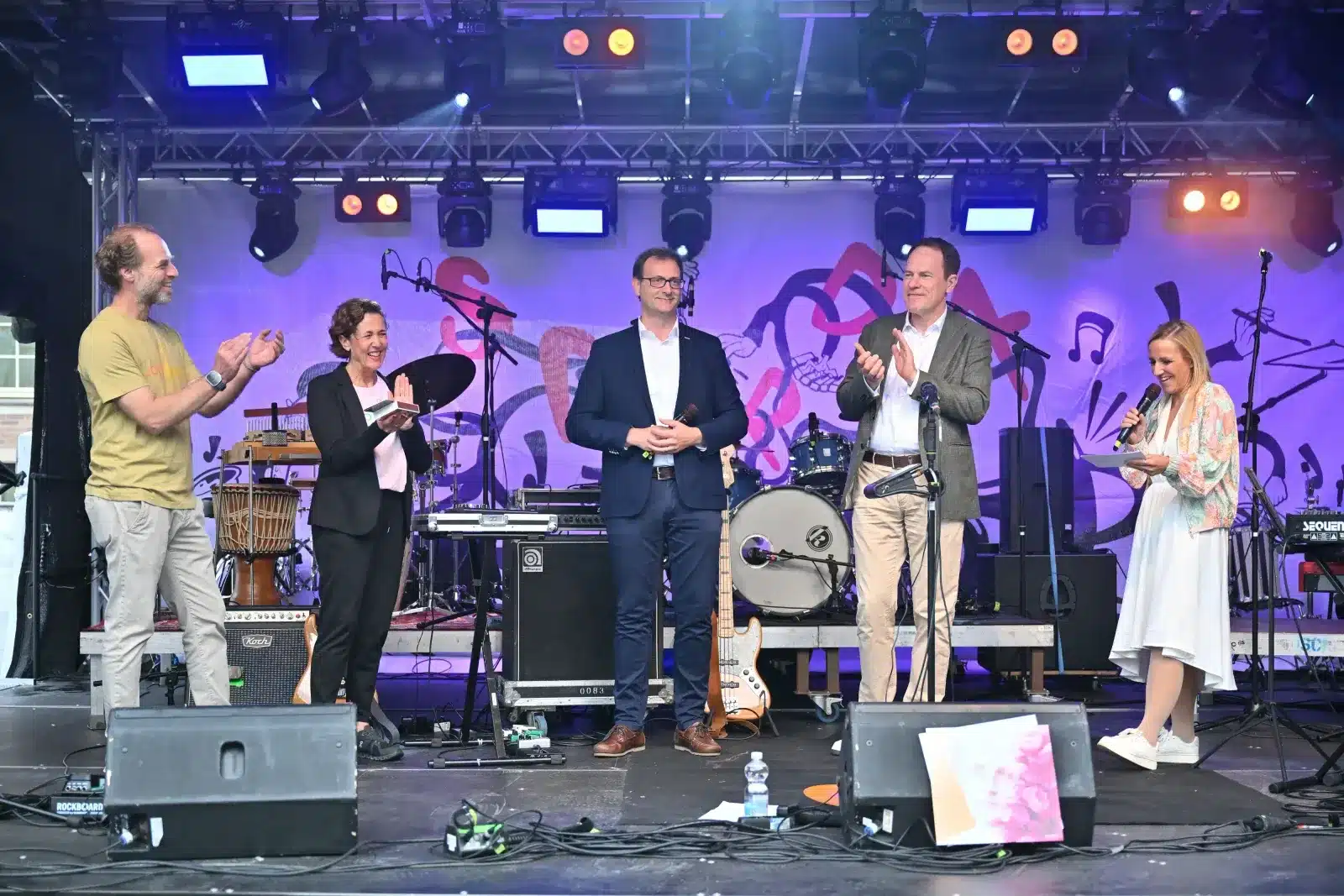
Sparda-Bühne: The Sparda stage is an important open-air location in central Düsseldorf. It is presented as free and outdoors and has featured the Sparda Jazz Award winners alongside emerging artists. In 2026, performers included Searching for Home, Jan Prax Quartet, TILAR, Teresa Luna, Savannah Hauskeller and kâyame.
Kunst- und Kulturstrand am Tonhallenufer: This riverside location provides an outdoor setting for concerts and festival activity beside the Rhine. It hosted multiple performances during the 2026 programme.
Stadtstrand am Robert-Lehr-Ufer: Another riverside setting, this location has been used for daytime and afternoon concerts.
Theatermuseum Düsseldorf Hofgartenhaus: The museum’s performance rooms provide an indoor environment for intimate concerts, poetry and special programmes. The venue hosted the Lore-Lorentz-Saal and Louise-Dumont-Saal during previous editions.
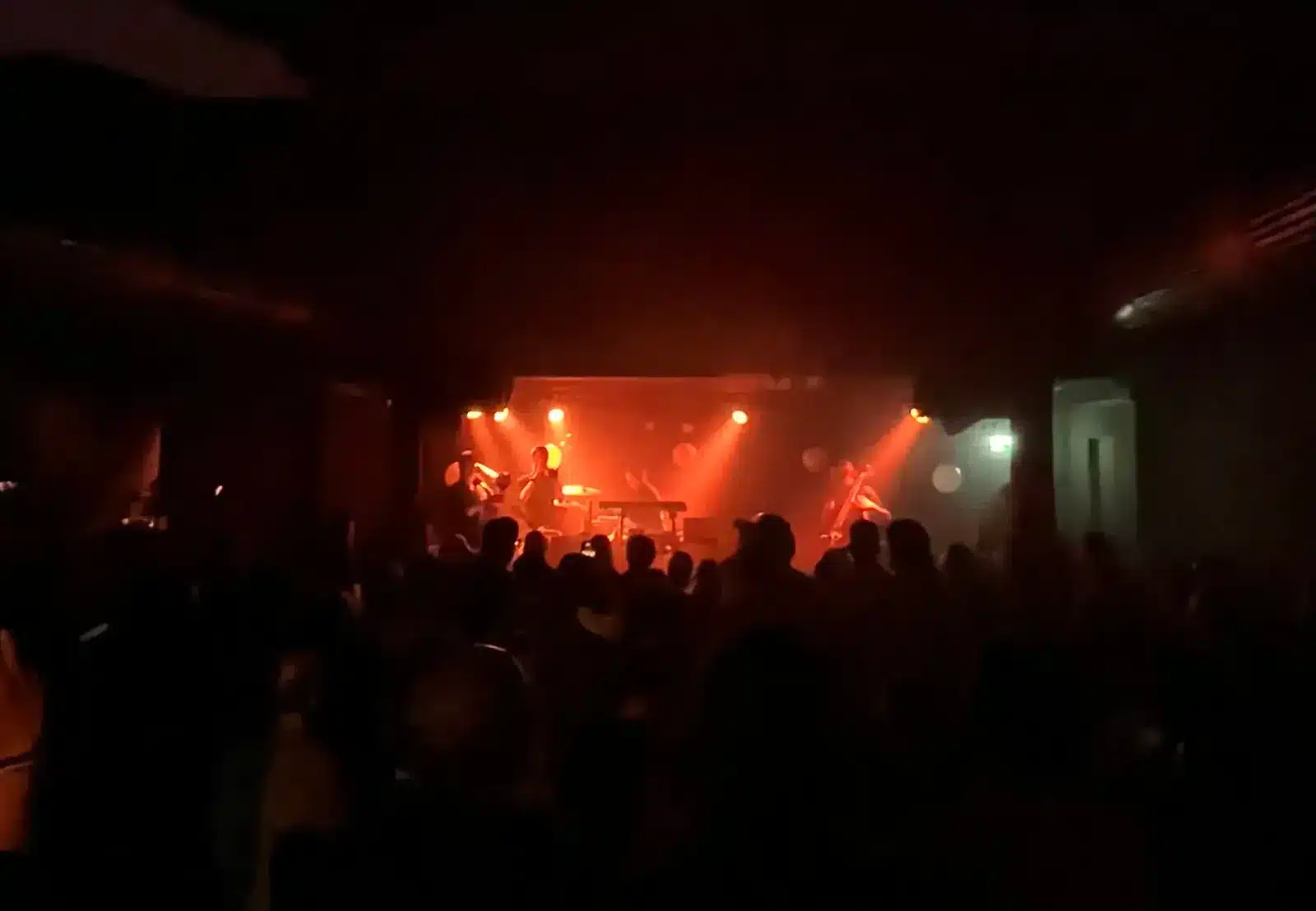
Jazz clubs and cultural venues: Locations such as Zakk, Ampere, Ratinger Hof, Maxhaus, Rudas Studios and Schleuse Zwei provide more traditional club environments.
Stage-by-stage schedule
The detailed 2027 schedule has not yet been published. Based on the 2026 format, visitors can expect the programme to be distributed across multiple venues and time slots throughout the four festival days.
The previous programme included daytime activities such as workshops and city tours, afternoon open-air concerts, early-evening emerging-artist performances and later headline-style club shows.
A typical festival day may therefore involve several different types of activities:
- Morning cultural tours or workshops
- Afternoon open-air performances
- Emerging-artist showcases
- Early-evening jazz concerts
- Evening club performances
- Late-night contemporary music sets
- Poetry, talks or film programmes
The official festival app has previously allowed visitors to create their own timetable from the published programme, making it particularly useful when multiple concerts overlap.
Set times
Exact 2027 set times have not yet been announced.
The 2026 schedule demonstrates that performances can begin around midday and continue until late evening. For example, Tiny Lovebird Session started at noon, outdoor performances took place during the afternoon, and several club and concert performances were scheduled between 8:00 p.m. and 10:00 p.m.
Examples from 2026 included:
- Tiny Lovebird Session: 12:00 p.m.
- UKU VIBES: 2:00 p.m.
- David Giesel Quartet: 4:15 p.m.
- TILAR: 5:00 p.m.
- Sebastian Gahler Electric Project: 6:30 p.m.
- Marcus Schinkel Trio feat. Ernie Watts: 8:00 p.m.
- Johanna Summer & Malakoff Kowalski: 8:30 p.m.
- Alexander Ruess Trio: 9:00 p.m.
- DELIZ: 10:00 p.m.
These are 2026 reference times only and should not be interpreted as the 2027 running order.
Ticket types
Lovebird uses a mixed ticketing model because more than half of the 2026 programme was free. The festival’s official statistics state that more than 50% of programme items were available without admission charges.
Free programme: Open-air concerts and selected festival activities can be free of charge. The Sparda stage, for example, is explicitly described as free and outdoors.
Individual concert tickets: Many indoor concerts require separate tickets. In 2026, prices varied according to the artist and venue. Examples included Diego Piñera from approximately $23, Adja from approximately $24, Nils Kugelmann Trio from approximately $24, and Nneka from approximately $36, using approximate currency conversion from the published prices.
Special-event tickets: Cultural programmes can have different pricing. The Sound of Düsseldorf tour was listed from approximately $21, while The Musical Poetry Album was listed from approximately $7 in 2026.
2027 prices have not yet been announced, so previous-edition prices are provided only as planning references.
VIP & premium options
Lovebird Festival does not currently advertise a conventional VIP ticket system with separate lounges, premium viewing platforms or backstage hospitality packages.
The festival’s concept is based more on accessibility and participation than on premium tiers. Its 2026 edition reported that more than half of its programme was free, while the festival also highlighted diversity and broad cultural access.
Visitors looking for a more intimate experience can choose smaller indoor concerts in venues such as museums, churches, cultural houses and clubs. These locations often have considerably smaller capacities than major concert halls and provide a different atmosphere from the open-air programme.
Event rules
Venue-specific rules: Because Lovebird takes place across many independent venues, admission rules can differ from one location to another. Visitors should check the instructions attached to their individual event.
Ticket validity: A ticket for an individual concert generally applies to that particular performance and venue. Free outdoor programmes operate separately from paid indoor events.
Weather: Outdoor performances can be affected by weather. The 2025 and 2026 programmes included cancellations or changes at riverside locations because of weather forecasts, demonstrating that outdoor schedules can change for safety reasons.
Accessibility: Some venues are explicitly marked as barrier-free, while accessibility can vary between historic buildings, clubs, museums and outdoor locations.
Photography and recording: Rules concerning photography and recording can vary by venue and performance. Visitors should follow the instructions of the respective venue and festival team.
How to get there
Lovebird Festival takes place throughout Düsseldorf, making the city centre the most useful base for visitors attending several events.
Düsseldorf is well connected to the German rail network and has an international airport, making it practical for visitors arriving from other German cities or from abroad.
The most useful approach is to plan each day’s route around the specific venue rather than searching for one central festival entrance. The official 2026 venue list included locations in areas such as Altstadt, Stadtmitte, Pempelfort, Bilk, Oberbilk and other parts of Düsseldorf.
For international visitors, Düsseldorf Airport provides an important arrival point, while Düsseldorf Hauptbahnhof is the city’s principal railway connection.
Public transport & parking
Public transport is particularly useful for Lovebird because the festival is distributed throughout Düsseldorf.
Visitors can use Düsseldorf’s U-Bahn, tram, bus and regional rail network to travel between venues. Central locations such as the Sparda stage, Rathauskeller, Theatermuseum, Maxhaus and Palais Wittgenstein can be reached within the city’s public transport network.
Walking can also be practical when moving between central venues. Some festival locations are relatively close together, allowing visitors to combine concerts with sightseeing.
For drivers, parking availability depends on the individual venue. Because Lovebird does not have one central parking area, visitors should check parking options around each venue and consider public transport when several concerts are scheduled in different districts.
Accommodation areas
Visitors attending multiple days should consider staying in central Düsseldorf, particularly around the Hauptbahnhof, Stadtmitte, Altstadt or nearby neighbourhoods with good public transport connections.
Düsseldorf city centre: Provides convenient access to many of the central festival venues and makes it easier to return to accommodation between performances.
Altstadt: Useful for visitors attending concerts around Ratinger Hof, Palais Wittgenstein, Maxhaus and nearby central locations.
Hauptbahnhof area: Practical for visitors arriving by train and for those planning to travel to venues in different parts of the city.
Bilk and MedienHafen: These areas can be useful for visitors attending venues such as Schleuse Zwei/Bilker Bunker and Rudas Studios.
The festival has previously worked with hotel partners, and its 2026 programme included a hotel partnership as part of the festival’s visitor infrastructure.
Food & drink
Because Lovebird takes place across Düsseldorf rather than at one fenced festival ground, food and drink are generally available through the city’s restaurants, cafés, bars and individual venue facilities.
Riverside locations such as the Kunst- und Kulturstrand and Stadtstrand provide a particularly relaxed environment where visitors can combine music with drinks and food during outdoor performances. The 2025 festival described its city beach locations as places for relaxation, culture, drinks and small food offerings.
Visitors should also allow enough time between concerts to eat away from the venue when their itinerary moves across the city.
The festival’s distributed format makes it possible to experience Düsseldorf’s wider food scene as part of the weekend rather than relying on one centralized festival food court.
Accessibility
Accessibility varies according to the individual Lovebird venue.
Some festival locations are explicitly marked as barrier-free. For example, the Theatermuseum Düsseldorf Hofgartenhaus – Lore-Lorentz-Saal was identified as barrier-free in the festival’s venue information, while the Sparda stage was also described as barrier-free.
Other venues occupy historic buildings, clubs or temporary outdoor spaces, so accessibility arrangements may differ. Visitors using wheelchairs or requiring step-free access should check the specific venue before purchasing tickets.
The festival’s decentralized format means there is no single accessibility policy covering every location. Planning the exact route between venues is therefore particularly important for visitors with mobility requirements.
Best days to attend
Thursday: The opening day is useful for visitors who want to experience the beginning of the festival and explore its first concerts and outdoor programmes. The four-day format means Thursday can be quieter than the later weekend days.
Friday: Friday is likely to provide a broad mixture of club concerts, open-air performances and cultural programmes. The 2026 Friday programme included Adja, Nneka, Nils Kugelmann Trio, Diego Piñera, Kazdoura and several Sparda stage performances.
Saturday: Saturday traditionally offers one of the densest programme selections, with daytime workshops, outdoor concerts, award showcases, museum performances and evening concerts. The 2026 Saturday schedule ran from midday through late evening.
Sunday: Sunday provides a more relaxed closing-day experience, with daytime city activities and riverside concerts. The 2026 programme included André George & The Roots Horn Section, UKU VIBES and Daria & Marco.
For visitors travelling specifically for jazz discovery, attending all four days provides the widest opportunity to experience the festival’s different musical styles and locations.
Previous year’s highlights
The 2026 edition was the festival’s third edition and brought together more than 10,000 visitors across 20 locations. The official festival reported 41 acts, 12 represented main genres, nine special programmes and 12 newcomers or developing artists.
Musical highlights included Nils Kugelmann Trio, Johanna Summer & Malakoff Kowalski, Norlyz, Marcus Schinkel Trio feat. Ernie Watts, Searching for Home, Diego Piñera and Jan Prax Quartet.
The festival also expanded beyond conventional concerts through the Sparda Jazz Award anniversary activities, workshops for young musicians, poetry, a Düsseldorf music-history tour, film screenings and bird-focused activities.
One of the festival’s defining features was the large amount of free programming. More than half of the 2026 programme was free, including open-air concerts at the Sparda stage and other public locations.
The 2026 edition also demonstrated the importance of weather planning for outdoor venues. Several outdoor performances were cancelled or modified because of weather forecasts, showing why visitors should monitor official festival updates when planning riverside performances.
Official tickets
The official Lovebird Festival website is the primary source for the 2027 programme, ticket releases and venue information. The festival has confirmed the 3–6 June 2027 dates, but the detailed artist programme and 2027 ticket prices have not yet been published.
For planning purposes, 2026 ticket prices ranged from free outdoor concerts to paid indoor performances costing roughly $7–$46 or more, depending on the artist and event. For example, Nneka was listed from approximately $36, Marcus Schinkel Trio feat. Ernie Watts from approximately $30, and Mari Froes from approximately $46.
The festival’s previous programme also included free performances such as Birdwatch Trio, while paid special events and tours had their own individual tickets.
Visitors should use the official Lovebird programme once the 2027 schedule is released because each concert may have a separate ticket, venue and admission arrangement.
Contact: info@lovebird-festival.de
Tickets Sell Out
in Minutes
Maps
Contact
FAQ's
When is Lovebird Festival 2027?
Lovebird Festival 2027 will take place from 3–6 June 2027 in Düsseldorf, Germany. The festival lasts four days and combines jazz, contemporary music, soul, funk, electronic sounds, international music and cultural events across venues throughout the city.
Where is Lovebird Festival held?
Lovebird Festival does not have one permanent festival site because concerts take place at multiple Düsseldorf venues. Previous editions used locations including the Sparda stage, riverside city beaches, Theatermuseum, Goethe-Museum, Palais Wittgenstein, Maxhaus, Zakk, Ampere and several other cultural and music venues.
Has the Lovebird Festival 2027 lineup been announced?
The 2027 dates have been confirmed, but the official artist lineup has not yet been released. The 2026 edition featured 41 acts across 20 locations, including Nils Kugelmann Trio, Nneka, Diego Piñera, Johanna Summer & Malakoff Kowalski and Marcus Schinkel Trio feat. Ernie Watts.
Is Lovebird Festival free?
A substantial part of the festival programme is free, although many indoor concerts and special events require individual tickets. In 2026, more than half of the programme was free, including performances at outdoor locations such as the Sparda stage and selected concerts in other public spaces.
What kind of music is featured at Lovebird Festival?
Lovebird focuses strongly on jazz but presents the genre in a broad contemporary context, including soul, funk, hip-hop, electronic music, Afro-Latin influences, global music, pop and experimental projects. The festival also includes cultural programmes such as workshops, talks, poetry, film screenings and music-history tours.