
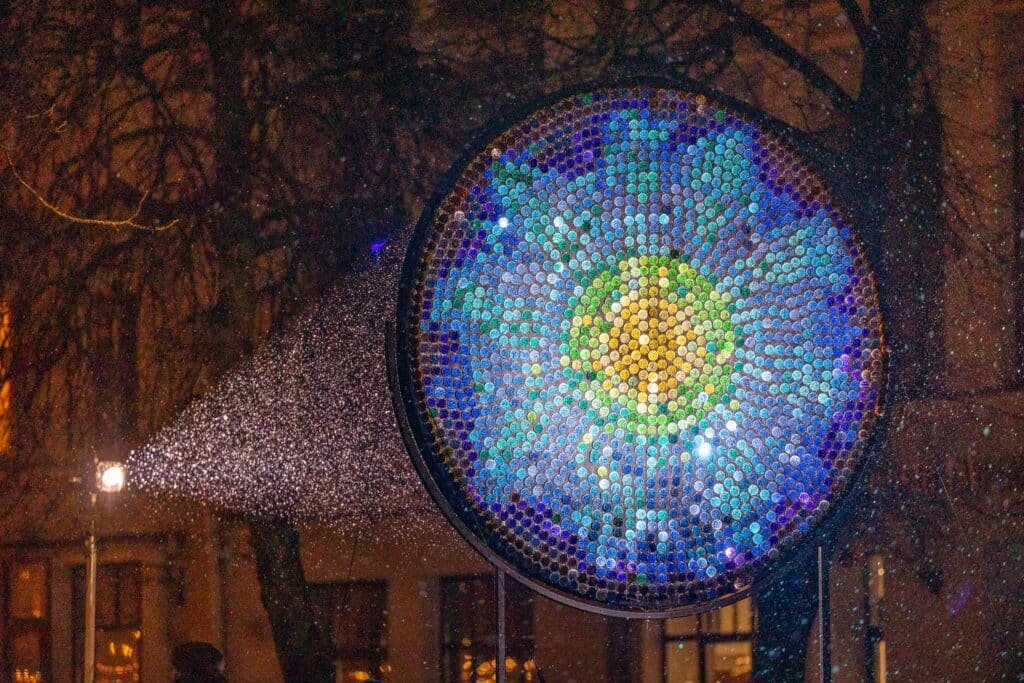

Vilnius Light Festival 2027 – Lithuania
What to expect in 2027
Vilnius Light Festival 2027 will turn Lithuania’s capital into a large-scale open-air gallery of contemporary light art from 22–24 January 2027. For three winter evenings, light installations, digital art, dynamically moving architecture and illuminated public spaces will transform the historic centre and Old Town of Vilnius.
The festival is held as part of Vilnius’ birthday celebrations. The city’s birthday is connected with 25 January 1323, when Grand Duke Gediminas sent his famous letters to European cities and rulers. The Light Festival brings this historical occasion into a contemporary setting by using light, technology and artistic installations to reinterpret the city’s architecture and public spaces.
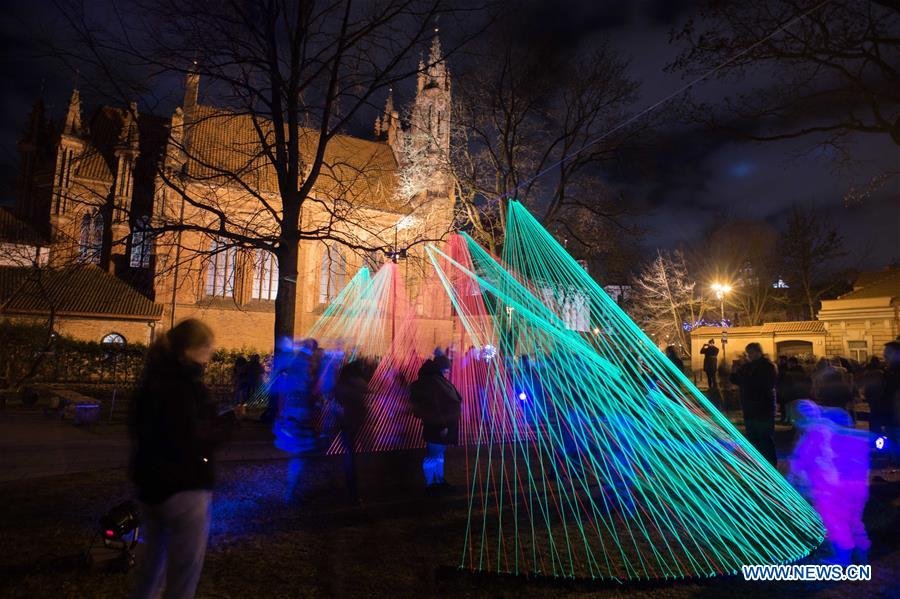
The 2027 edition will again take place primarily outdoors. Streets, squares, courtyards and other urban spaces will become temporary exhibition areas where visitors can discover contemporary light works while walking through Vilnius.
Make Your European Event Trip Easy with Eura Travelo
Traveling to Europe for a festival, concert, sporting event, or business occasion involves more than simply choosing an event. Eura Travelo helps bring your journey together with support for travel planning, accommodation, event arrangements, and local experiences. Save time, reduce the hassle, and enjoy a smoother journey from planning to the event itself.
The festival is also being developed as an international contemporary light-art event. The 2027 open call invited artists and organisations to submit projects for presentation in Vilnius’ Historic Centre, a UNESCO World Heritage site. The selection process considers artistic originality, technical implementation, weather resistance, environmental integration and the relationship between light and music.
The festival is free to attend, making it possible for visitors to experience the installations without purchasing a general admission ticket. Exact installation locations and visiting times will be published with the final programme.
Event dates
Vilnius Light Festival 2027 takes place from Friday, 22 January through Sunday, 24 January 2027.
The official Vilnius Events listing states that the festival is open each evening from 5 PM to 10 PM. Individual installations may have their own visiting times, so visitors should check the final programme before setting out.
The three-day schedule is:
- Friday, 22 January: Festival opening and evening light-art route
- Saturday, 23 January: Full evening programme across the city centre
- Sunday, 24 January: Final evening of the 2027 festival
The official festival website currently confirms the dates but states that the exact visiting times for individual installations will be announced together with the programme.
Visiting this event? Don’t miss out on these amazing activities and local experiences while you’re here.
Venue & exhibition site
Vilnius Light Festival does not use a conventional exhibition hall. Instead, the city itself becomes the exhibition site.
The principal setting is Vilnius Old Town and the surrounding central districts. Installations can appear in streets, squares, courtyards, building façades and other public spaces, allowing visitors to experience art while moving through the historic urban landscape.
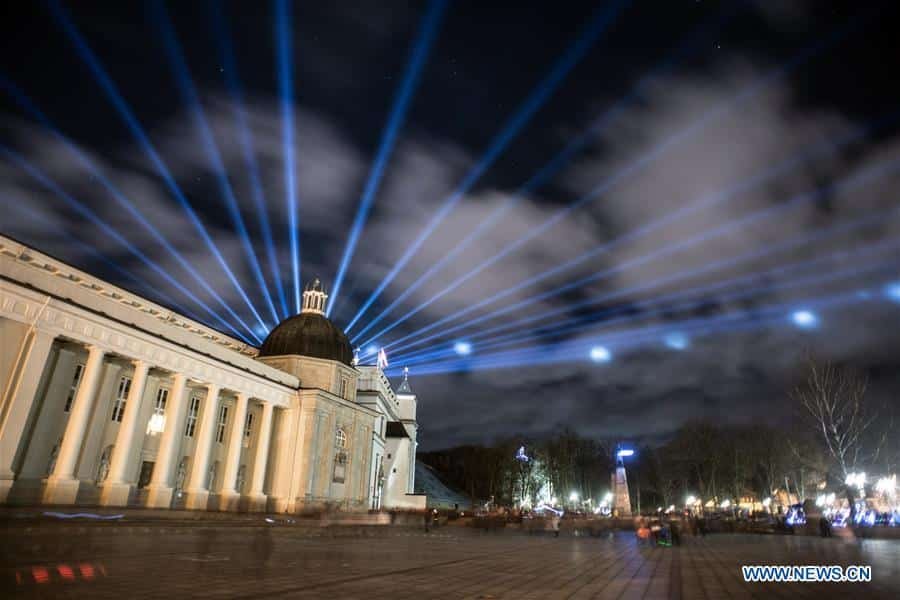
The festival’s open-air format is particularly suited to Vilnius because the Historic Centre contains Gothic, Renaissance, Baroque and Classical architecture. During the festival, these buildings become part of the artistic experience rather than simply serving as a backdrop.
The exact 2027 route and installation map have not yet been published. The official website says visitors will be able to find the exact location of each installation on the festival map.
Full exhibition programme
The complete 2027 installation programme has not yet been announced. The festival’s official website currently confirms the dates and general artistic format, while the open call confirms that new projects were being selected for the 2027 edition.
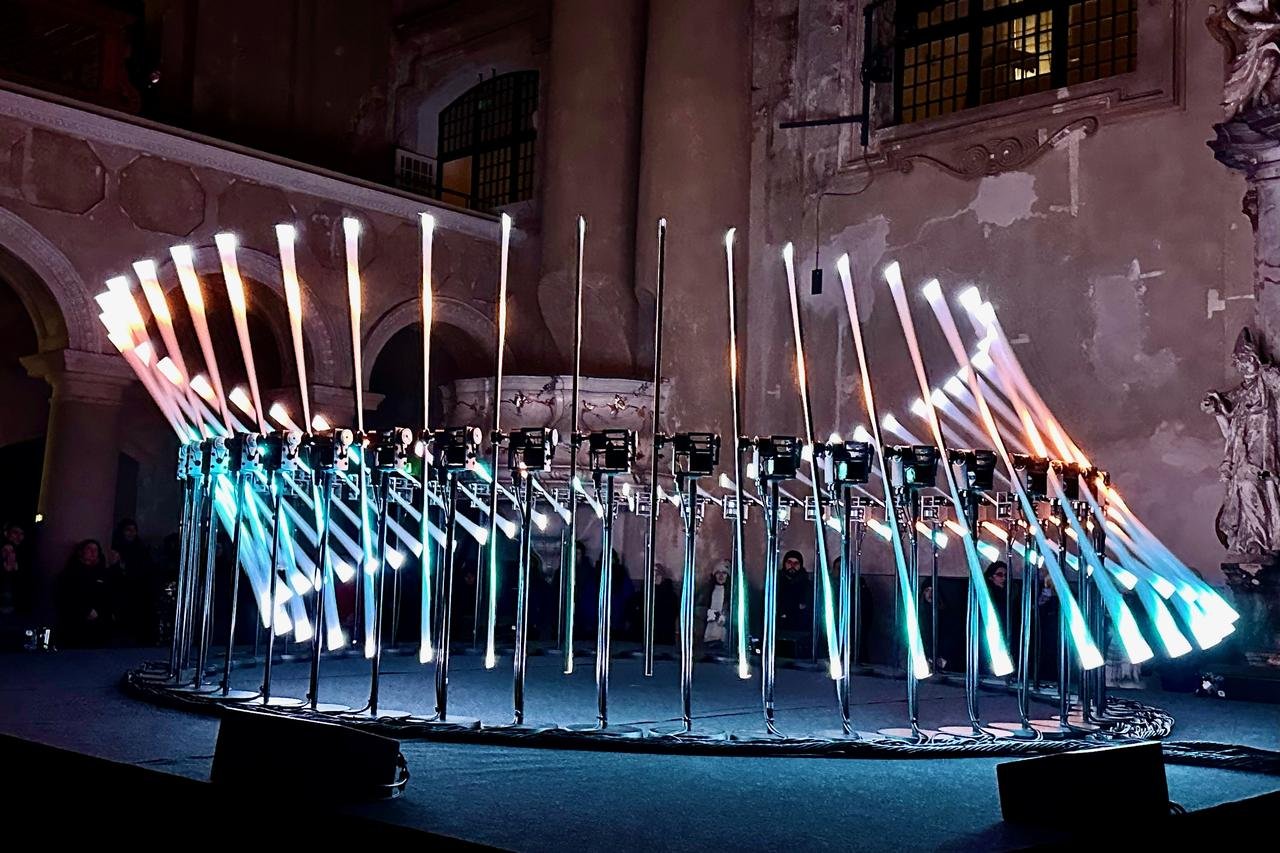
The programme is expected to focus on contemporary light art rather than conventional gallery exhibitions. Projects may combine illumination with architecture, digital technology, sound, movement and interactive elements.
The 2027 open call specifically asks creators to make light the primary and integral means of artistic expression. Proposed works are also assessed for their relationship with the urban environment and their ability to withstand winter conditions such as snow, rain and wind.
The organisers have also invited artists to reflect on Lithuania’s second presidency of the Council of the European Union during the first half of 2027. This provides an important contextual theme for the new edition, particularly around intercultural dialogue and Lithuania’s European identity.
Visitors should therefore expect a mixture of large-scale outdoor installations, architectural light works, digital projects and pieces designed specifically for particular Vilnius locations.
Featured artists & designers
The complete list of 2027 artists and designers has not yet been released publicly. The festival’s open call was intended to bring together established contemporary light artists and emerging creative talent for the January 2027 programme.
The festival has an established history of presenting international creators. Previous editions have included artists and creative studios from numerous European countries and beyond, combining installation art, digital technology, architecture, sound and interactive design.
For example, the 2026 edition featured artists from ten countries and presented as many as 25 installations. Its programme included internationally recognised artists alongside Lithuanian creators and emerging talent.
The 2027 selection will therefore be best understood as an evolving contemporary art programme rather than a traditional exhibition with a fixed permanent roster.
Galleries & exhibitors
There are no conventional commercial exhibitors or gallery booths at Vilnius Light Festival. Instead, artists, designers, creative studios and cultural organisations contribute individual works that are installed around the city.
The festival’s open-air format means that a courtyard, square, historic building or public street can effectively become a temporary exhibition room. Visitors move between installations rather than entering one exhibition hall.
The Historic Centre is especially important because the organisers aim to create a dialogue between contemporary light art and Vilnius’ historic urban environment. The open call specifically asks applicants to demonstrate synergy between the proposed project and its surroundings.
Exhibition halls & sections
There are no numbered exhibition halls or permanent indoor sections for the 2027 festival. Instead, the festival route is divided geographically according to the locations of individual installations.
Typical areas include:
- Historic Old Town: Illuminated streets, façades and courtyards
- Public squares: Larger installations and gathering spaces
- Historic courtyards: More intimate and immersive artworks
- Architectural sites: Projects that interact directly with buildings
- Contemporary cultural spaces: Locations where light art can be combined with modern artistic environments
- Undiscovered urban spaces: Less familiar parts of central Vilnius revealed through illumination
The final map will be important for planning an efficient route because the installations are distributed rather than concentrated inside one venue. The official festival website states that the exact location of each installation will be available through its map.
Talks, workshops & special events
The 2027 programme currently focuses primarily on light installations and the open-air artistic route. No complete schedule of talks or workshops has yet been announced.
Previous editions have demonstrated that the festival can include additional artistic and cultural content alongside the installations, particularly where artists discuss their creative approaches or where special projects are presented in cultural institutions.
Visitors should check the final programme for any artist talks, guided activities, performances or special events added to the 2027 schedule.
The festival’s mobile application is also intended to help visitors follow the programme, locate installations and obtain information about individual works.
Ticket types
Vilnius Light Festival 2027 is free admission. The official Vilnius Events listing explicitly identifies the festival as a free event.
There is therefore no standard general-admission ticket required to walk through the festival route and view the public installations.
Visitors should still check the individual description of any special indoor programme item because separate activities, if introduced, may have their own access arrangements.
For the main outdoor festival, visitors can simply arrive in the relevant area during the published opening period and follow the official installation map.
VIP & collector access
Vilnius Light Festival is not organised as a conventional commercial art fair and does not currently advertise VIP tickets, collector passes or premium admission packages.
The focus is public access to contemporary light art across the city. This means that visitors experience the installations in public urban spaces rather than through a private collector programme.
If the 2027 programme later introduces special previews, artist meetings or invitation-only cultural activities, these will need to be checked against the official festival announcements. No VIP or collector package has currently been announced.
Event rules
Because the festival takes place in public streets, courtyards and squares, visitors should respect normal public-space and event-safety requirements.
Stay on designated pedestrian routes and follow temporary barriers or instructions from organisers and security personnel. Some installations may use bright, moving or interactive light effects, so visitors should follow any warnings displayed at individual works.
Do not touch, climb on or interfere with installations unless the artwork is specifically designed for visitor interaction.
The festival takes place outdoors in January, so appropriate winter clothing and footwear are important. Snow, ice, rain and freezing temperatures can affect walking conditions.
Visitors should also expect temporary traffic restrictions around busy festival areas. During previous editions, organisers advised visitors to explore the route on foot because traffic restrictions were introduced during the festival.
How to get there
Vilnius is served by an international airport with direct connections to numerous European destinations. The airport is located close to the city centre, making it practical for international visitors attending a short weekend festival.
From Vilnius Airport, visitors can use the airport railway service, city buses or taxis.
The airport train takes up to approximately eight minutes to reach Vilnius Railway Station. The railway station is close to the central city and provides a convenient starting point for reaching the Old Town.
Several buses also connect the airport with central Vilnius, including routes 88, 1, 2 and 3G. The 88N night bus provides an additional option for late-night airport travel.
Once in central Vilnius, many festival locations can be reached on foot. This is particularly useful because the festival itself is designed as a walking route through streets, squares and courtyards.
Public transport & parking
Vilnius has an integrated public transport network consisting mainly of buses and trolleybuses. The city’s official visitor information also recommends using real-time transport information through the Trafi app.
Public transport is particularly useful during the festival because central streets can become busier and temporary traffic restrictions may affect driving routes.
Visitors arriving by car should be aware that parking in central Vilnius and the Old Town is paid. JUDU divides paid parking into blue, red, yellow and green zones, with different operating times and rates.
There are also parking facilities and Park & Ride options around the city. Official visitor information lists 24-hour parking facilities including Gedimino Avenue 9A, Tilto Street 14 and T. Kosciuškos Street 1A.
For festival evenings, public transport or walking can be more convenient than attempting to drive directly between installations.
Accommodation areas
The Old Town is the most convenient area for visitors who want to experience the festival primarily on foot. Staying near Cathedral Square, Pilies Street, Town Hall Square or the southern part of the Old Town places visitors close to many central cultural attractions.
The area around Gedimino Avenue is another practical choice, offering accommodation, restaurants and straightforward access to the Old Town and central districts.
Visitors who prefer to stay near transport connections can consider the area around Vilnius Railway Station and the central bus station. This can be useful for travellers arriving by train or airport bus.
Užupis is another distinctive neighbourhood option, particularly for visitors who want an artistic atmosphere and easy access to the eastern side of the Old Town.
Because the festival takes place during winter and runs only three evenings, accommodation close to the centre can reduce the amount of outdoor travel required between the hotel and festival route.
Food & refreshments
Food is not the primary focus of Vilnius Light Festival, but visitors can combine the light-art route with Vilnius’ extensive restaurant and café scene.
During previous editions, temporary food and drink areas have also been introduced along parts of the festival route. In 2026, for example, a food-truck area operated in Konstantinas Sirvydas Square during all three festival evenings, offering hot drinks and snacks from 5 PM to 10 PM.
Visitors should expect cafés, restaurants and bars in and around the Old Town to provide additional places to warm up during the evening.
For a winter visit, hot drinks, Lithuanian comfort food and traditional pastries can make a useful part of the festival experience. Visitors can also plan a restaurant stop before or after completing the light route.
The exact 2027 food-truck and refreshment programme has not yet been published.
Accessibility
Because Vilnius Light Festival is primarily an outdoor event in public streets, accessibility varies according to individual locations.
Some parts of the historic centre include cobblestones, uneven surfaces, steps and narrow passages. Winter conditions can also create additional challenges for wheelchair users and visitors with limited mobility.
Visitors should check the final installation map and individual location information before visiting if step-free access is important. The festival’s public-space format means there is no single accessibility standard covering every installation.
Vilnius Airport provides special assistance services for passengers with reduced mobility, including accessible routes and assistance arrangements.
Visitors should also allow extra time when travelling between installations and consider the weather conditions when planning an accessible route.
Must-see exhibitions
Although the final 2027 installation list has not yet been published, several types of work are likely to be particularly important to the festival experience.
Architectural light installations
Works that interact with historic façades and buildings are central to the festival’s identity. They allow visitors to see familiar Vilnius architecture in an entirely different way.
Interactive digital art
Previous editions have included interactive installations responding to visitors through movement, touch, sound or changing light. These projects can be particularly engaging for families and younger visitors.
Large-scale public installations
Major installations in squares and open public spaces provide some of the festival’s most visible landmarks and often serve as natural meeting points along the route.
Light and sound works
The 2027 open call specifically considers musical soundtracks as part of the selection criteria, so visitors can expect the relationship between light and sound to remain an important artistic possibility.
Site-specific installations
Projects created specifically for Vilnius can make use of courtyards, historic buildings and unusual urban spaces. These works are particularly valuable for visitors who want to discover parts of the Old Town that they might otherwise overlook.
Previous year’s highlights
The 2026 Vilnius Light Festival marked the city’s 703rd birthday and presented up to 25 light-art objects. Artists from ten countries participated, and the festival route connected locations including the Lithuanian Theatre, Music and Cinema Museum, Vilnius University courtyards, Cathedral Square, the Vilnius Academy of Arts Palace, K. Sirvydas Square and the Contemporary Art Centre.
One of the highlighted works was Deviation by German artist Sven Sauer at the Radvila Palace Art Museum. Sauer’s work combined light, sound, movement and spatial experience rather than treating illumination simply as decoration.
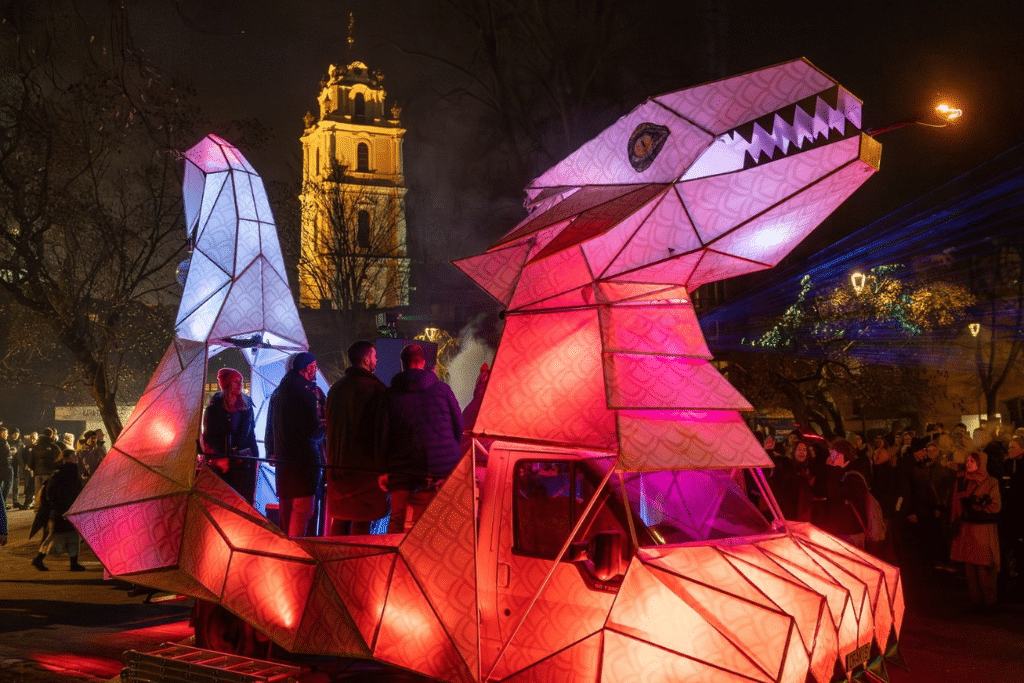
The 2026 programme also brought back Drakis, a mythological light object created by the Lituanica Birds team. It was installed in Konstantinas Sirvydas Square for the second consecutive year, where visitors could also find a food-truck area serving hot drinks and snacks.
The festival’s earlier editions have also featured international names including Olivier Ratsi, Philippe Morvan, Cristian Rizzuti, Iregular and Architecture Social Club. A previous programme included interactive, kinetic, digital and sound-based installations throughout historic Vilnius locations.
These previous editions demonstrate the festival’s continuing emphasis on combining contemporary technology with the historic architecture and public spaces of Vilnius.
Official tickets
Vilnius Light Festival 2027 is a free-admission event, so there is no general festival ticket to purchase. The official Vilnius Events listing confirms free admission, while the festival website provides the dates, format and future programme information.
Visitors should use the official festival map and mobile application once the 2027 programme is released. These resources are intended to provide installation locations, descriptions and practical information for navigating the festival route.
The official festival website is the primary source for programme updates, installation announcements and any special access arrangements.
Official event website: https://lightfestival.lt/en/
Official Vilnius Events listing: https://www.vilnius-events.lt/en/event/en-events-vilnius-light-festival/
Tickets Sell Out
in Minutes
Maps
Contact
Video
FAQ's
When is Vilnius Light Festival 2027?
Vilnius Light Festival 2027 takes place from 22–24 January 2027 in Vilnius, Lithuania. The festival is scheduled to operate each evening from 5 PM to 10 PM, although individual installations may have their own visiting times.
Where does Vilnius Light Festival take place?
The festival takes place across Vilnius, particularly in the Old Town and central city areas. Streets, squares, courtyards and public spaces become temporary exhibition sites, with the exact locations published through the official festival map.
Is Vilnius Light Festival 2027 free to attend?
Yes, the main Vilnius Light Festival is free and open to the public. Visitors do not need a general admission ticket to walk through the public festival route and view the outdoor light installations.
What can visitors see at Vilnius Light Festival?
Visitors can expect contemporary light installations, digital art, illuminated architecture and projects that combine light with sound or movement. The final 2027 installation list has not yet been published, but the programme is being developed as an international contemporary light-art exhibition.
Is Vilnius Light Festival suitable for families?
Yes, the festival is presented as a family-friendly public event and takes place outdoors across the city. Families can walk between installations together, although winter weather, crowds, uneven historic streets and bright or interactive light effects should be considered when planning a visit.