Semana Santa Sevilla 2027 – Seville, Spain
Overview
Semana Santa de Sevilla, or Seville Holy Week, is one of Spain’s most important religious and cultural celebrations. In 2027, Holy Week in Seville will take place from 21 to 28 March, beginning with Palm Sunday and ending on Easter Sunday. The celebration combines Catholic devotion, historic brotherhoods, processional art, music, traditional clothing and centuries-old customs that transform Seville’s streets throughout the week.
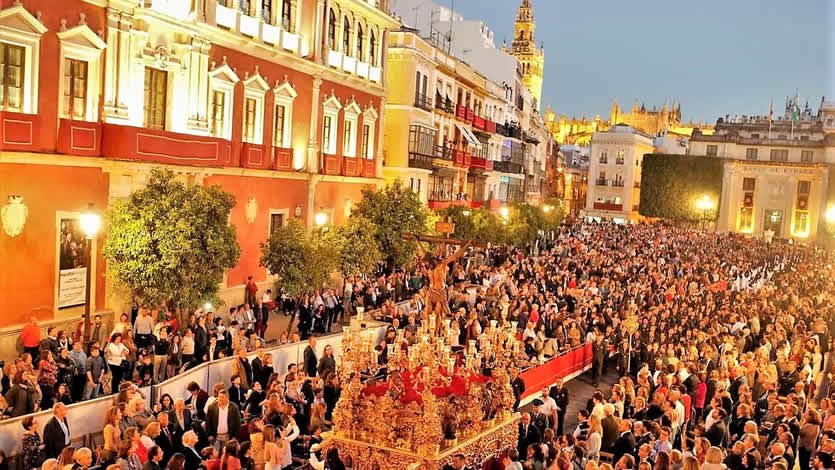
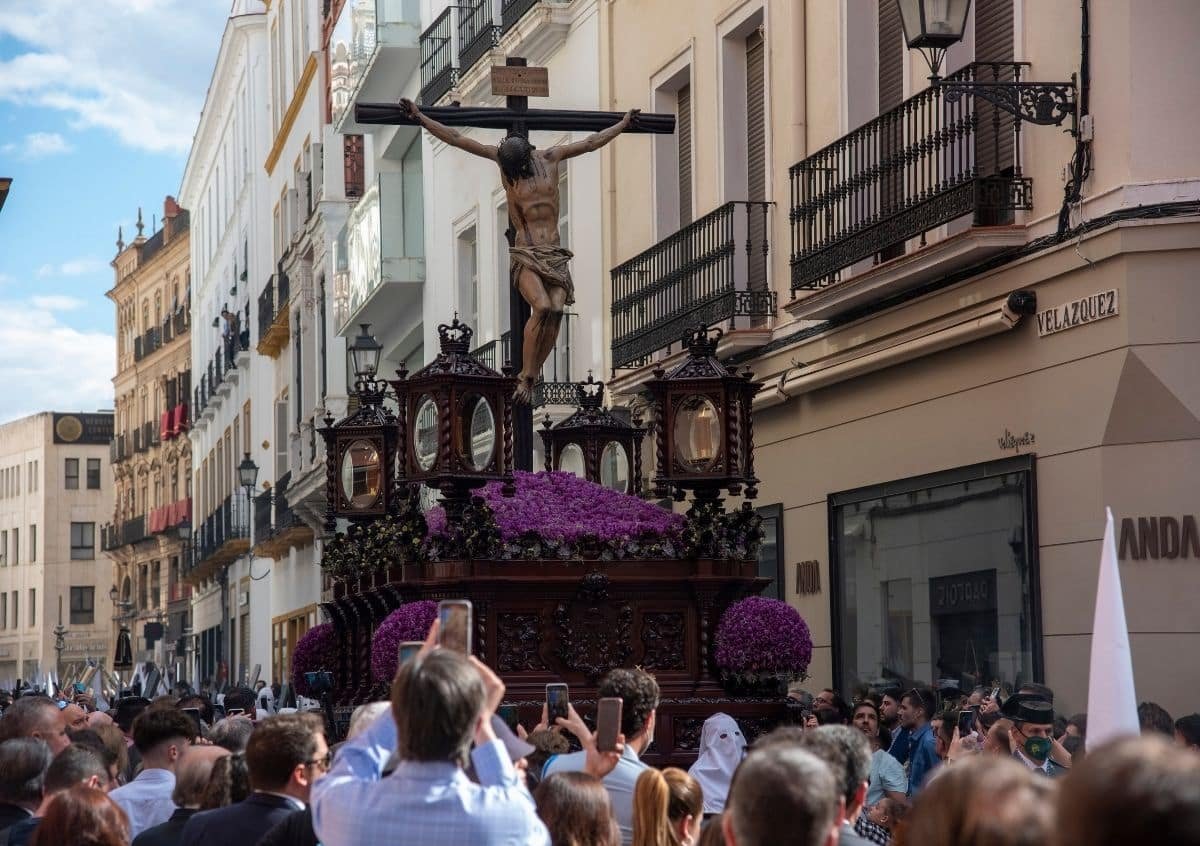
The centrepiece is the series of daily penitential processions organised by Seville’s religious brotherhoods, known as hermandades or cofradías. Each procession carries elaborately decorated religious floats, known as pasos, depicting scenes of Christ’s Passion or the Virgin Mary. The processions leave their home churches and eventually make a penitential station at Seville Cathedral.
The event is officially recognised as a Fiesta of International Tourist Interest and is experienced throughout the historic city rather than inside one festival venue. For visitors, this means that different neighbourhoods, churches, squares and streets offer different perspectives on the celebration.
Make Your European Event Trip Easy with Eura Travelo
Traveling to Europe for a festival, concert, sporting event, or business occasion involves more than simply choosing an event. Eura Travelo helps bring your journey together with support for travel planning, accommodation, event arrangements, and local experiences. Save time, reduce the hassle, and enjoy a smoother journey from planning to the event itself.
Cultural Significance & Origins
Semana Santa in Seville has roots extending back more than seven centuries. While the tradition developed over a long period, the artistic and ceremonial character associated with modern Seville Holy Week was particularly shaped during the Baroque period.
The celebration is organised around religious brotherhoods devoted to particular images of Christ or the Virgin Mary. These brotherhoods are not simply procession organisers; they are religious associations whose activities also include worship, spiritual formation and charitable work.
The processions represent different moments associated with the Passion, Death and Resurrection of Jesus Christ. The combination of religious imagery, sculpture, embroidery, gold and silverwork, flowers and music has made Semana Santa an important part of Seville’s artistic heritage as well as its religious life.
A defining feature is the Estación de Penitencia, the penitential station made by the brotherhoods at the Cathedral. The official route through central Seville is known as the Carrera Oficial, beginning at Plaza de la Campana and continuing through the historic centre towards the Cathedral.
Traditions, Rituals & Customs
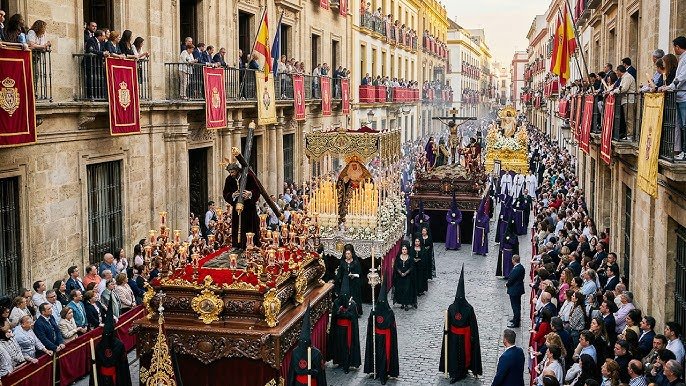
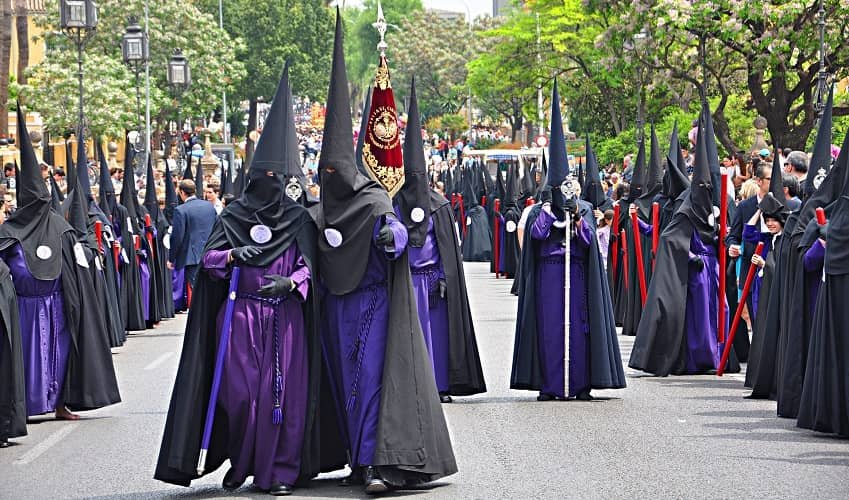
The most recognisable tradition is the procession of the nazarenos, members of the brotherhoods who walk in organised formation wearing distinctive robes and pointed hoods known as capirotes.
The costaleros are the people who carry the heavy pasos beneath the structures. From outside, visitors may see only the decorated float moving through the streets, but underneath it is supported and manoeuvred by a team of bearers working together.
Music is another fundamental part of the experience. Processions can be accompanied by marching bands, while other moments are marked by the voices of saetas, traditional religious songs performed from balconies or other locations as a procession passes.
The mantilla is another important tradition. On Maundy Thursday and Good Friday, many women traditionally wear black mantillas as a symbol of mourning and solemnity.
Visitors should remember that these are religious observances rather than theatrical performances. Photography is common, but visitors are expected to behave respectfully, particularly near churches, religious services and moments of prayer.
What to Expect at the Festival
During Semana Santa, Seville effectively becomes an open-air setting for religious art and processions. Several brotherhoods can process on the same day, with some leaving their churches during daylight while others continue into the evening or early morning.
The pasos are usually the visual centre of each procession. Some are carried by teams of costaleros and decorated with candles, flowers and detailed religious imagery. Behind or around them come nazarenos, musicians and other members of the brotherhood.
The most intense atmosphere can often be found in the narrow streets of the historic centre, where large processional floats move through relatively confined spaces. However, visitors can also experience processions in neighbourhoods away from the busiest central areas.
The official Carrera Oficial connects Plaza de la Campana with Seville Cathedral. Every brotherhood making its penitential station follows this central section of the route.
Because processions can take hours to complete their routes, a single visit can involve a considerable amount of walking and waiting. Some brotherhoods also return to their home churches late at night or in the early hours of the following day.
Date & Schedule
Semana Santa Sevilla 2027 runs from Sunday, 21 March through Sunday, 28 March 2027. The principal religious days are:
21 March – Domingo de Ramos (Palm Sunday)
Holy Week officially begins with Palm Sunday. Processions take place throughout Seville, marking the beginning of the city’s main Semana Santa programme.
22 March – Lunes Santo (Holy Monday)
Brotherhoods continue their penitential stations, with processions moving between neighbourhood churches and the Cathedral.
23 March – Martes Santo (Holy Tuesday)
Another major day of processions, with numerous brotherhoods taking part in the city’s Holy Week traditions.
24 March – Miércoles Santo (Holy Wednesday)
Processions continue throughout the day and evening, building towards the central days of Holy Week.
25 March – Jueves Santo (Maundy Thursday)
This is one of the most important days of the celebration. The evening and night processions are followed by the Madrugá, the extraordinary overnight period leading into Good Friday. Maundy Thursday is also an official public holiday in Andalusia in 2027.
26 March – Viernes Santo (Good Friday)
Good Friday is another major day of religious observance and processions. It is a national public holiday in Spain and an Andalusian holiday in 2027.
27 March – Sábado Santo (Holy Saturday)
The processional programme continues, although the character of the day begins to move towards the Easter celebration.
28 March – Domingo de Resurrección (Easter Sunday)
Holy Week concludes with the celebration of Christ’s Resurrection.
Exact departure times, routes and the order of individual brotherhoods should be checked against the official 2027 programme when published. The Seville Holy Week authorities regularly make changes to routes and timings, and the 2027 Cathedral arrangements already include a revised internal route for the brotherhoods.
Visiting this event? Don’t miss out on these amazing activities and local experiences while you’re here.
Traditional Dress, Arts & Religious Imagery
The clothing worn during Semana Santa is one of its most recognisable cultural features.
Nazarenos wear the robes and capirotes associated with their particular brotherhood. The colours and designs vary between brotherhoods, making it possible to identify different processional groups as they move through the city.
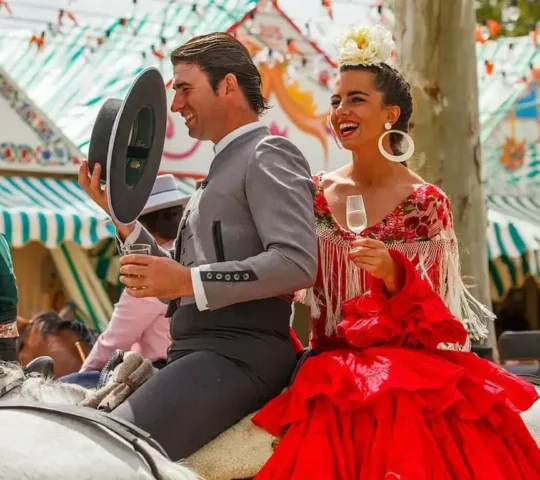
The mantilla negra, or black mantilla, is particularly associated with Maundy Thursday and Good Friday. It represents mourning and solemnity and is traditionally worn with formal black clothing.
The pasos themselves are also important examples of religious art. Many of Seville’s processional sculptures date from the 16th to 18th centuries, while the floats incorporate embroidery, precious-metal work, flowers, candles and other handcrafted elements.
For visitors interested in art and craftsmanship, observing the details of the sculptures, embroidered canopies, silverwork and floral arrangements can be as important as watching the procession itself.
Traditional Food & Local Specialties
Food is an important part of the Semana Santa experience, particularly through traditional Lenten and Easter cuisine.
During Lent and Holy Week, visitors can find dishes and sweets associated with the season. One of the best-known Andalusian Easter sweets is torrija, a preparation made from bread soaked in milk or another liquid, then sweetened and cooked before being served with sugar, cinnamon or other variations.
Other seasonal dishes can include preparations based on chickpeas, vegetables, cod and other ingredients traditionally associated with periods when meat consumption was restricted.
Seville’s bakeries and confectioners also become particularly interesting during Semana Santa because seasonal sweets form part of the wider cultural experience. Visitors should look for local specialities rather than treating Holy Week simply as a sightseeing event.
Location & Festival Areas
Semana Santa does not have a single festival venue. Processions begin at churches and religious centres throughout Seville and travel through different neighbourhoods before reaching the official central route.
The most important central areas include:
Plaza de la Campana is the beginning of the Carrera Oficial.
Calle Sierpes forms part of the central procession route and is one of the best-known streets in Seville’s historic centre.
Plaza de San Francisco is another important point along the official route.
Avenida de la Constitución leads the processions towards Seville Cathedral.
Seville Cathedral is the destination for the penitential station made by the brotherhoods. The Cathedral’s arrangements for 2027 include a newly organised internal route for the processions, with entry through the Puerta de San Miguel and departure through the Puerta de los Palos.
Beyond the Carrera Oficial, neighbourhoods such as Triana, Macarena and other historic districts provide opportunities to see brotherhoods closer to their home churches.
Getting to the Festival
Seville is well connected to other Spanish cities by rail, road and air. The city’s main railway station, Santa Justa, receives high-speed services including connections with Madrid and other major destinations.
Seville Airport is located northeast of the city and is connected with the centre by road and public transport.
For Semana Santa itself, travelling around the historic centre requires more planning than during a normal visit. Processions cause temporary road closures, pedestrian congestion and changes to public-transport routes.
Walking is often the most practical way to move between nearby viewing areas, but visitors should allow considerably more time than normal because streets can become crowded or temporarily inaccessible.
If you are travelling by car, it is generally more practical to leave the vehicle outside the busiest historic-centre areas and continue by public transport or on foot.
Where to Stay Nearby
Staying in or close to Seville’s historic centre provides convenient access to many of the principal Semana Santa areas, but accommodation demand can be exceptionally high during Holy Week.
The Casco Antiguo, Santa Cruz, Arenal, Alfalfa and areas around the Cathedral provide convenient bases for visitors who want to walk to central procession routes.
Triana is another interesting option, particularly for visitors interested in experiencing the traditions of one of Seville’s best-known neighbourhoods.
Because Semana Santa takes place over a full week and includes overnight processions, visitors should consider both location and noise levels when choosing accommodation. A hotel directly beside a major procession route may provide convenience but can also mean significant street activity outside the property.
What Visitors Can Participate In
Visitors can experience Semana Santa in several ways without being members of a brotherhood.
The most accessible activity is watching the processions from public streets. Visitors can also visit churches, explore the historic centre, attend permitted religious services and learn about the brotherhoods and their artistic heritage. The saeta is particularly memorable when experienced spontaneously during a procession. A singer may perform from a balcony or another position while a paso pauses or passes nearby.
Visitors should not attempt to join a procession, enter restricted areas or interfere with nazarenos, costaleros or other participants. The appropriate way to participate as a traveller is to observe respectfully and follow crowd-control instructions. For those interested in the religious side of the celebration, attending an open church service can provide a different perspective from simply watching a procession in the street.
Things to Do Before or After the Festival
Seville offers enough cultural attractions to build a longer trip around Semana Santa.
The Royal Alcázar of Seville is one of the city’s principal historic monuments and combines Islamic, Gothic, Renaissance and later architectural influences.
The Seville Cathedral and Giralda are particularly relevant during Holy Week because the Cathedral forms the destination of the penitential station made by the brotherhoods.
Plaza de España and María Luisa Park provide a quieter contrast to the crowded historic centre.
The neighbourhood of Santa Cruz is ideal for exploring narrow historic streets, courtyards and traditional architecture.
Triana is another worthwhile area to visit, particularly for its connection with ceramics, flamenco and the cultural life of the city.
Because many monuments can adjust their opening hours during Holy Week, visitors should verify schedules before planning sightseeing on individual days. Seville’s tourism authority specifically recommends combining the processions with visits to monuments while checking possible holiday timetable changes.
Local Food & Restaurants
Seville has a large selection of tapas bars, restaurants, cafés, bakeries and traditional food establishments. During Semana Santa, demand increases substantially around the historic centre.
Visitors can explore traditional Andalusian dishes alongside seasonal Holy Week foods. Tapas, fried fish, cured meats, gazpacho and local sweets are widely associated with Seville’s broader culinary culture.
For Holy Week, it is particularly useful to look for traditional torrijas and other seasonal pastries in local bakeries and confectionery shops.
Restaurant reservations are advisable for the busiest evenings, particularly from Maundy Thursday through Good Friday, when large parts of the city remain active late into the night.
Ticket Information & Access
The main Semana Santa processions take place on public streets, so visitors do not need a general festival admission ticket to experience the celebration.
However, seats and chairs are available along parts of the Carrera Oficial, and these are different from simply standing in a public street. The official Semana Santa documentation explains that seats along the official route can be obtained through weekly or individual-day arrangements, with prices varying according to location and day.
Visitors watching from public areas should arrive early, particularly at popular locations. Barriers, restricted zones and crowd-management measures can affect access during the busiest processions.
Churches and religious services may have their own entry arrangements, while museums and monuments generally operate separately from the public street processions.
There is therefore no single Semana Santa ticket covering the entire celebration.
Official Event Information
Event: Semana Santa de Sevilla
Dates: 21–28 March 2027
Location: Seville, Spain
Main Procession Period: Palm Sunday through Easter Sunday
Carrera Oficial: Plaza de la Campana → Calle Sierpes → Plaza de San Francisco → Avenida de la Constitución → Seville Cathedral
Official Tourism Website: https://visitasevilla.es/
Official Brotherhoods & Holy Week Information: https://www.hermandades-de-sevilla.org/
The official Seville tourism authority confirms the 2027 dates and provides a downloadable Holy Week 2027 programme. The General Council of Brotherhoods and Confraternities is responsible for official information concerning the brotherhoods, processions, routes and schedules.
For 2027, the Cathedral has also announced changes to the internal arrangement of the processions, so visitors should use the latest official information rather than relying entirely on previous years’ routes.
Tickets Sell Out
in Minutes
Maps
Contact
Video
FAQ's
What is Semana Santa in Seville?
It is Seville's annual Holy Week celebration, centred on religious processions organised by brotherhoods and accompanied by religious imagery, music, traditional clothing and centuries-old customs.
What are the most important days of Semana Santa?
Palm Sunday begins the week, while Maundy Thursday, the Madrugá and Good Friday are among the most significant periods for visitors interested in the major processions. Easter Sunday brings the celebration to its conclusion.
What is the Madrugá?
The Madrugá is the overnight period between Maundy Thursday and Good Friday. Several of Seville's best-known brotherhoods process through the city during the night and early morning, making it one of the distinctive experiences of Semana Santa.
What is the Carrera Oficial?
The Carrera Oficial is the fixed central section through which the brotherhoods make their penitential station. It begins at Plaza de la Campana and continues through central Seville towards the Cathedral.
What are the pasos?
Pasos are the large processional floats carrying religious sculptures and scenes. They may represent Christ, the Virgin Mary or events from the Passion. Many are important works of Spanish religious art.
Who are the nazarenos?
Nazarenos are members of the brotherhoods who accompany their procession in distinctive robes and pointed capirotes. Their clothing varies according to the particular brotherhood.
Who are the costaleros?
Costaleros are the people who carry and manoeuvre the pasos. They work beneath the structures and coordinate their movements so that the heavy floats can travel through Seville's streets.